• Rise and Fall

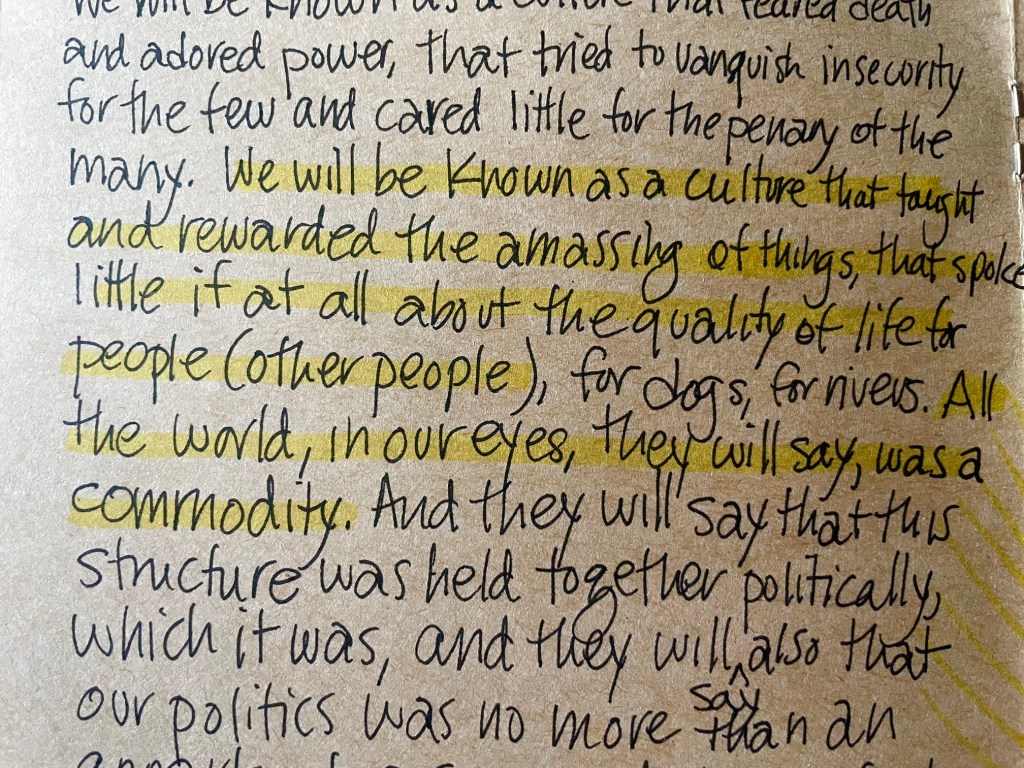
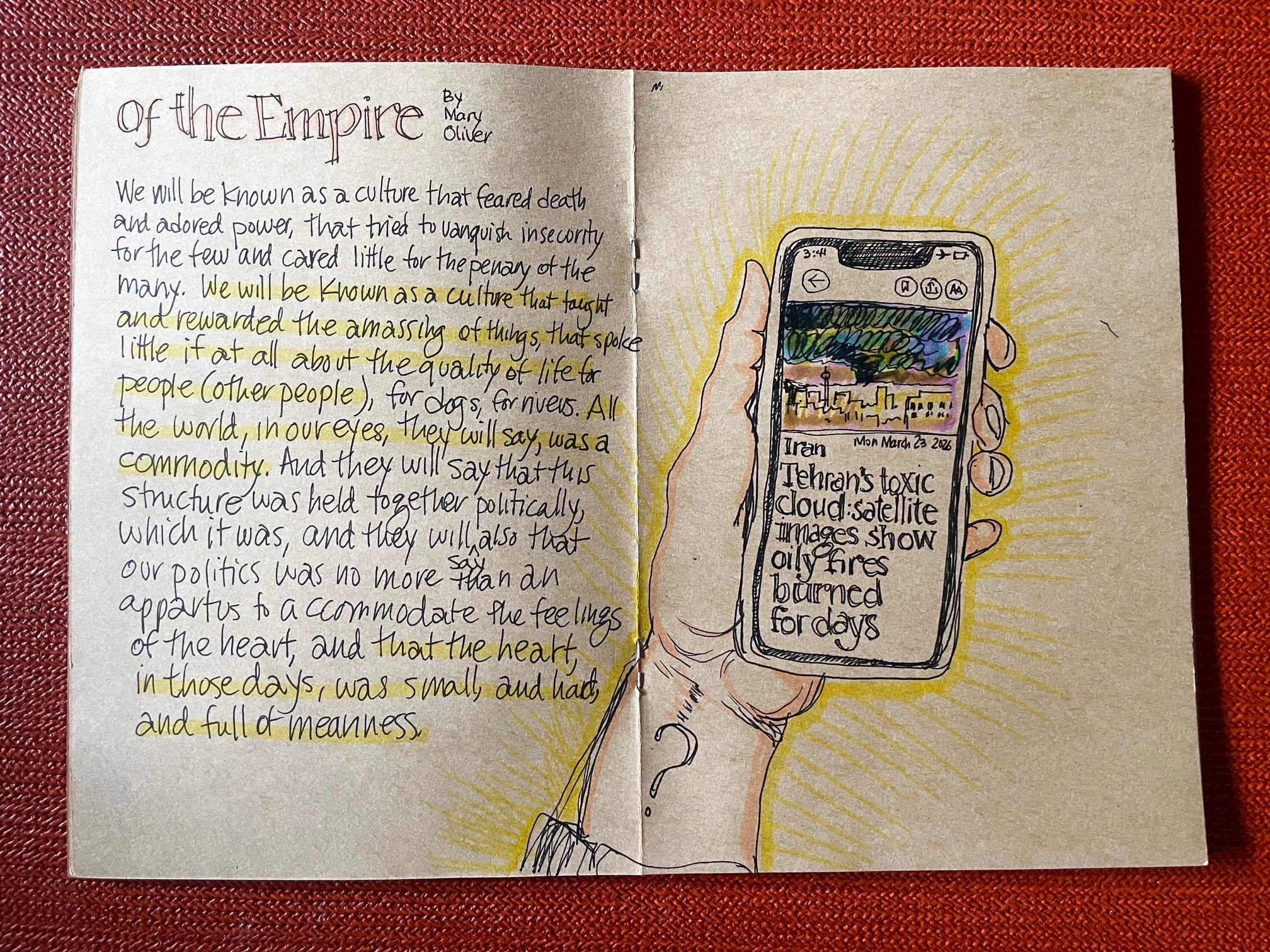
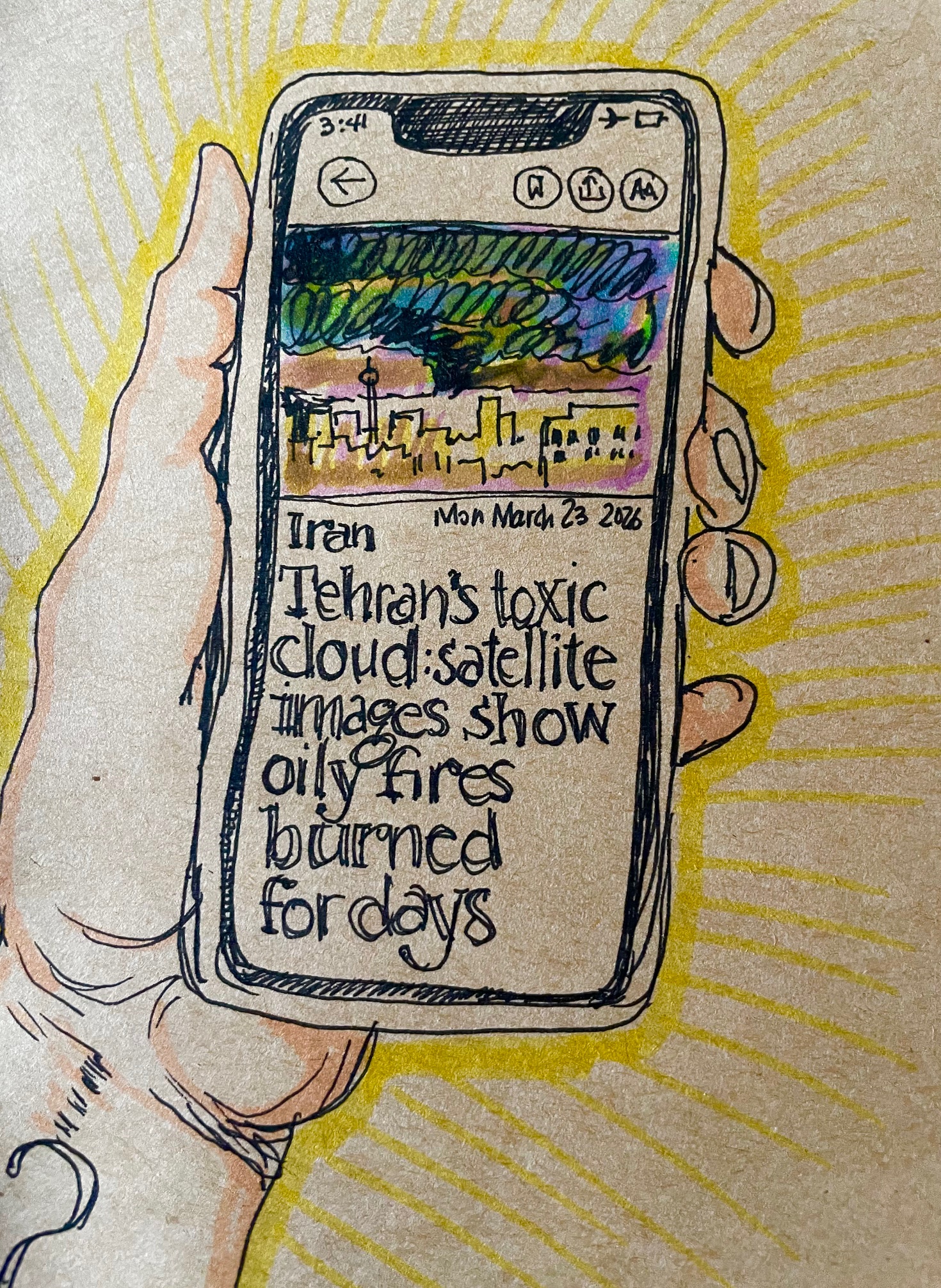
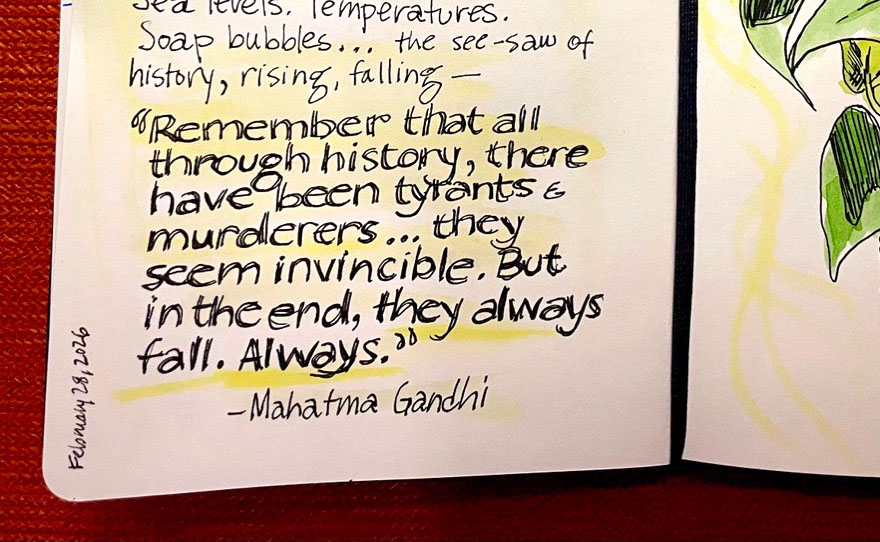
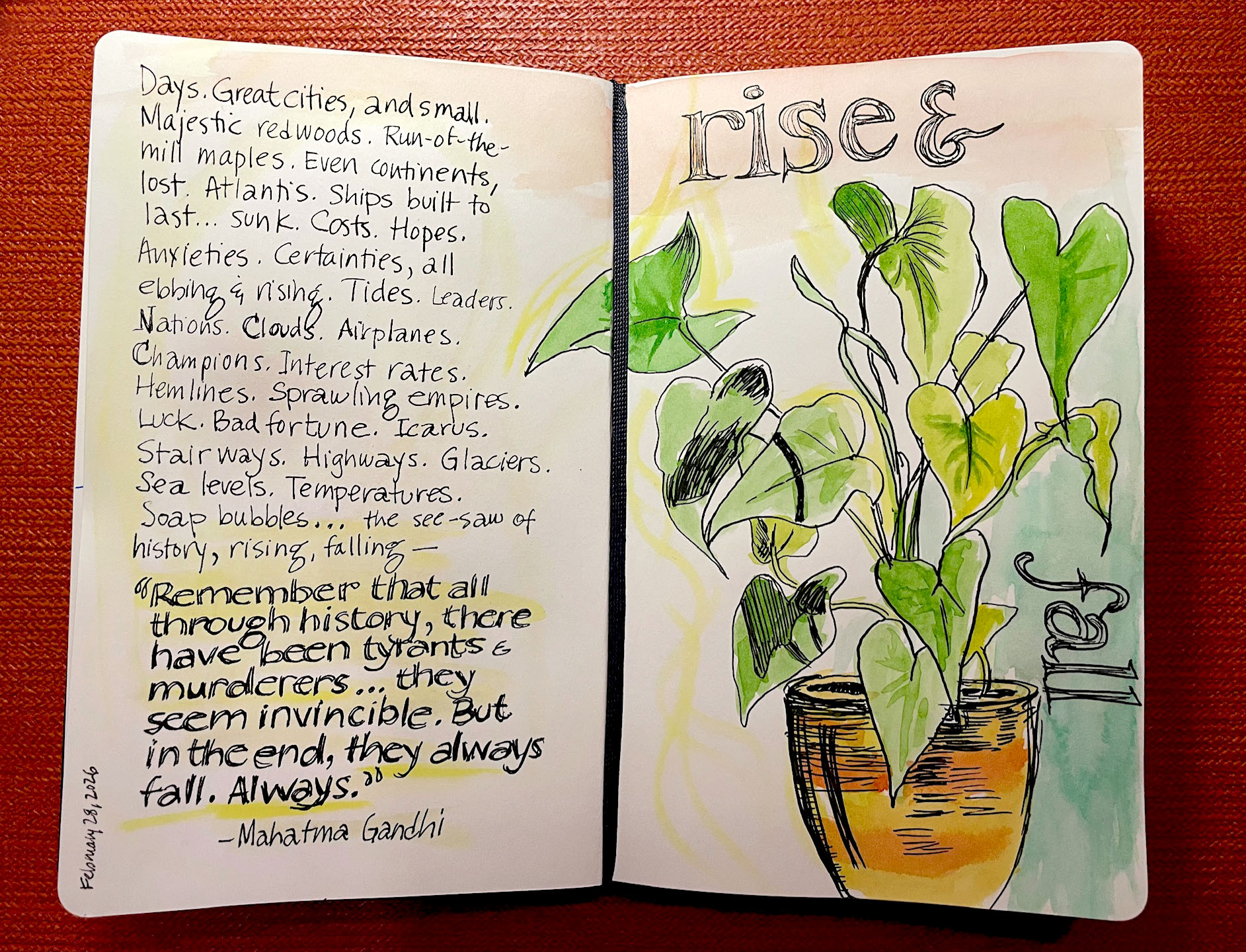
    On Saturday, February 28, I spent the morning writing with poet friends. I did not read the news beforehand. I was taking a little break. And yet, I wrote about ups & downs; I picked up a brilliant children’s book entitled Rise and Fall, illustrated by the brilliant Peter Allen. When I arrived home from writing and walking, I read the book, made this sketch. The quote is from the introduction in the book.

    It was fascinating to read about ancient, thriving civilizations that rose–and fell. Sometimes, historians have an idea of why they fell (often wars are involved, as well as disasters/disease)–other times, it remains a mystery to us.

    And then my beloved came home and asked had I heard the news.

    Sometimes, it feels as if relaxation or living life and NOT consuming news for a few hours might ’cause’ something bad to happen. Despite having that feeling initially, and getting sucked into a small spiral–I can take a breath, pray for peace, and take the action that I can take (calling those reps, again). We should not be in a war, and yet. Here we are.

    Breathe into this reality, and respond.

    A writing prompt to try: choose an object (or a living thing, I chose the plant)—study what you have selected. Breathe. Notice the colors, textures, form. What comes up for you, as you observe? Write down a word or phrase that comes to mind, and then write for five minutes. If you like to draw, add a sketch!

  • Some days peace is harder to find!
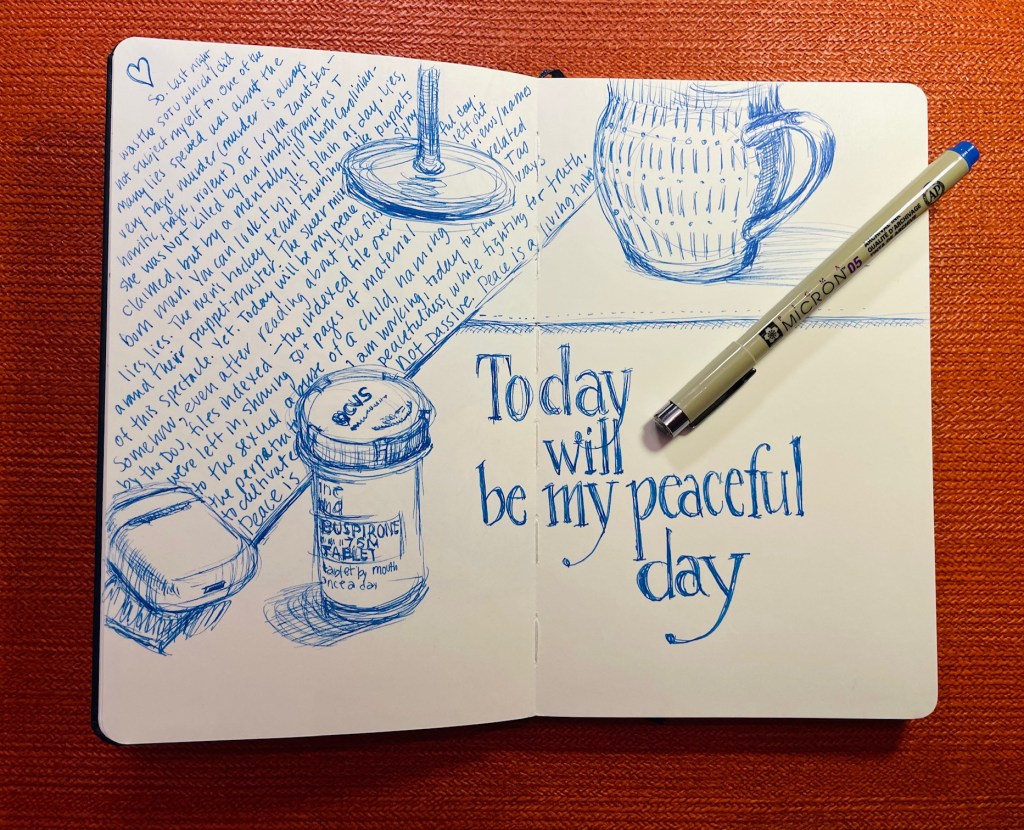
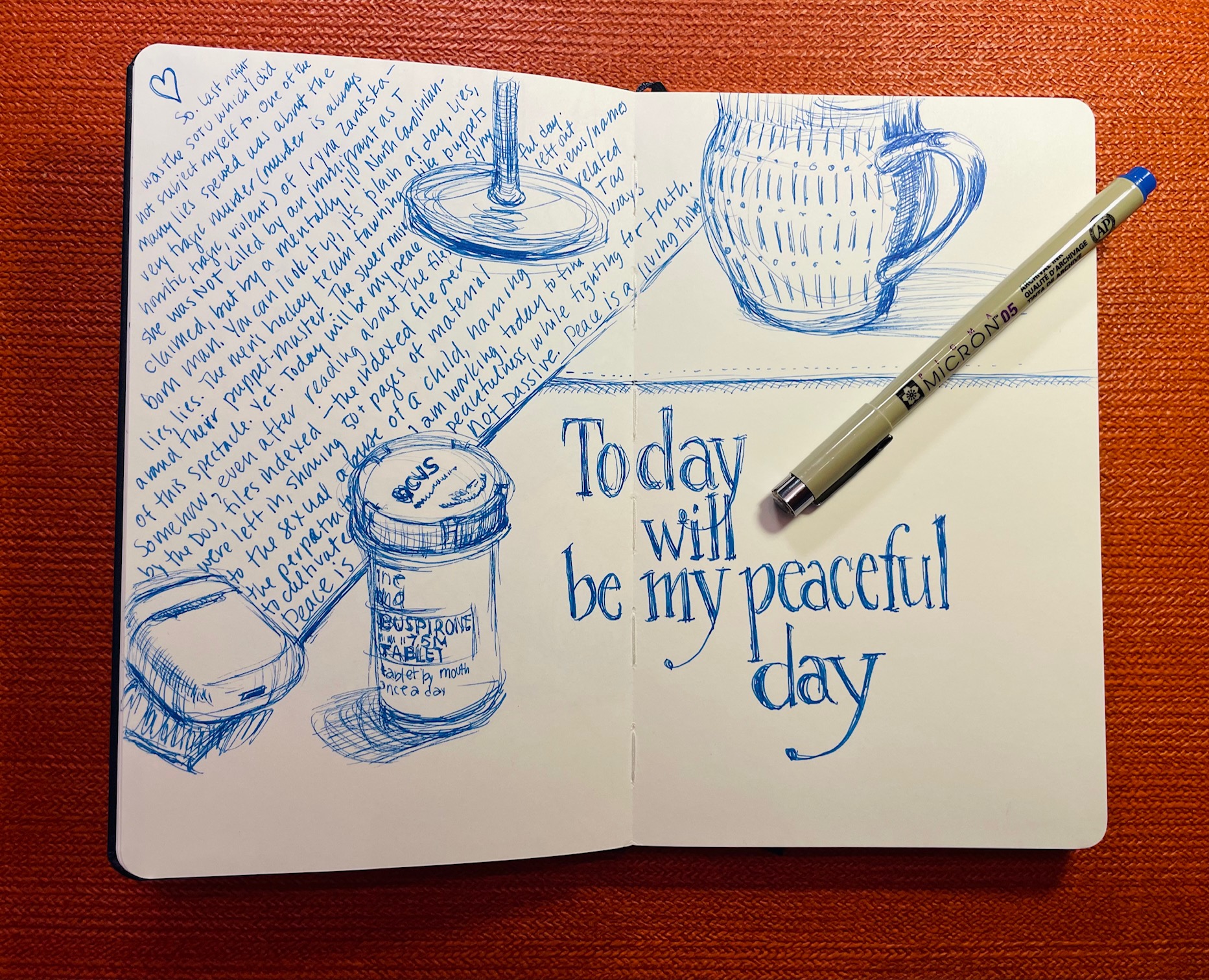
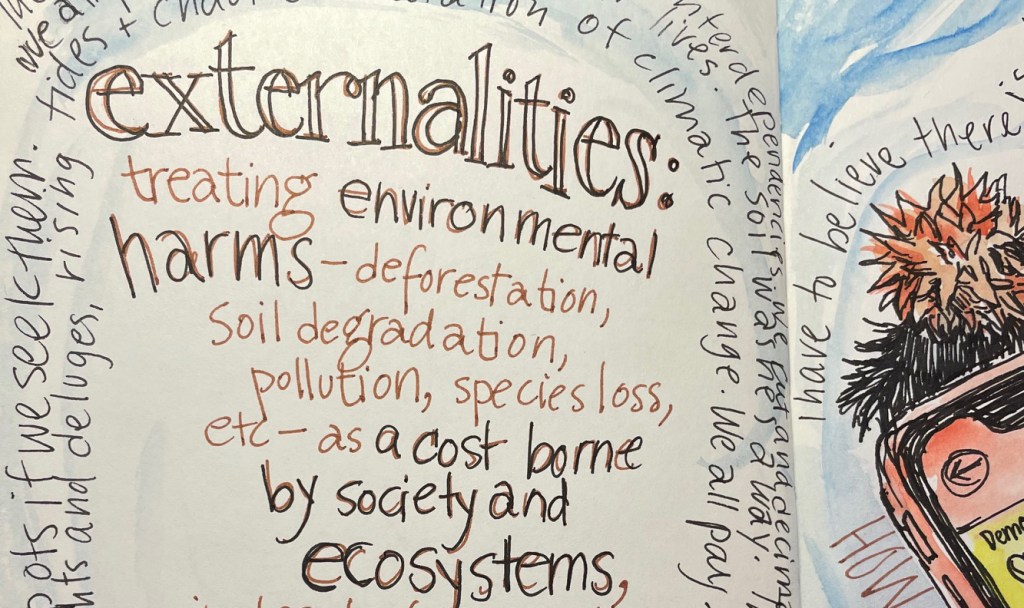
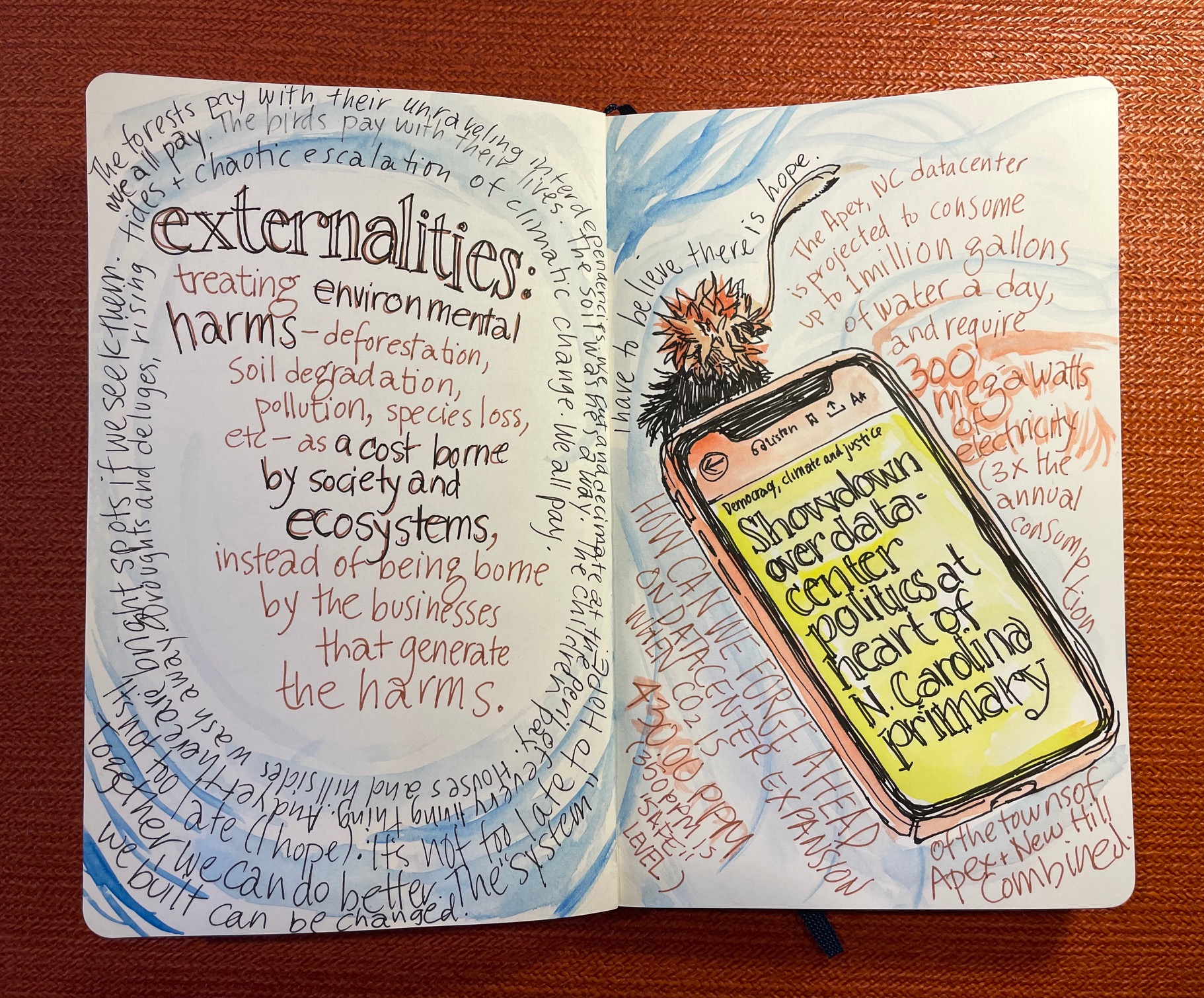
    Journal:morning after the State of the Union--image of pill bottle and words

    I drew this one the morning after the state of the union address (2/25/26).

    I’d gone to bed thinking about the Epstein files, about the rise of misogyny (not that it ever ‘went away’). Earlier that evening, while not watching the SOTU, my IG feed was overtaken by a gush of posts celebrating large families, many featuring older women having babies–(sometimes their 12th or 15th) and if that is your path and your choice, I’m all for it.

    However, my days of childrearing are behind me. I follow climate news and mindfulness news and current events. I follow warriors for racial justice. Immigrant’s rights. World news. Some humor. Poetry. Plant-based cooking. Musicians. Queer activists. Philosophy. Gardening. Literature (basically every area of study currently on the chopping block at your local U).

    There is no logical reason my feed was flooded with posts about the vital importance of staying home with my children. Even a post that seemed to be about a woman working in a corporate environment was slanted by an anxiety-tinged “you should be home, because only you can take care of your child” message. These posts came up immediately after I read about new findings in the Epstein files; they seemed to be…in reaction to that.

    After reading about Meta’s practices, I know their algorithmic ways are rarely random.

    Time to walk away from “my lover, the phone” and be here in the world, which we can create. Imagine a world of caring. Imagine a world you would like the children of tomorrow to wake to. Whether they are your own kin or not.

    What kind of world would you like to leave behind? Imagine it. Write about it. Meditate about it. Change begins with a vision.

    Tell me, what would you most like to leave behind?

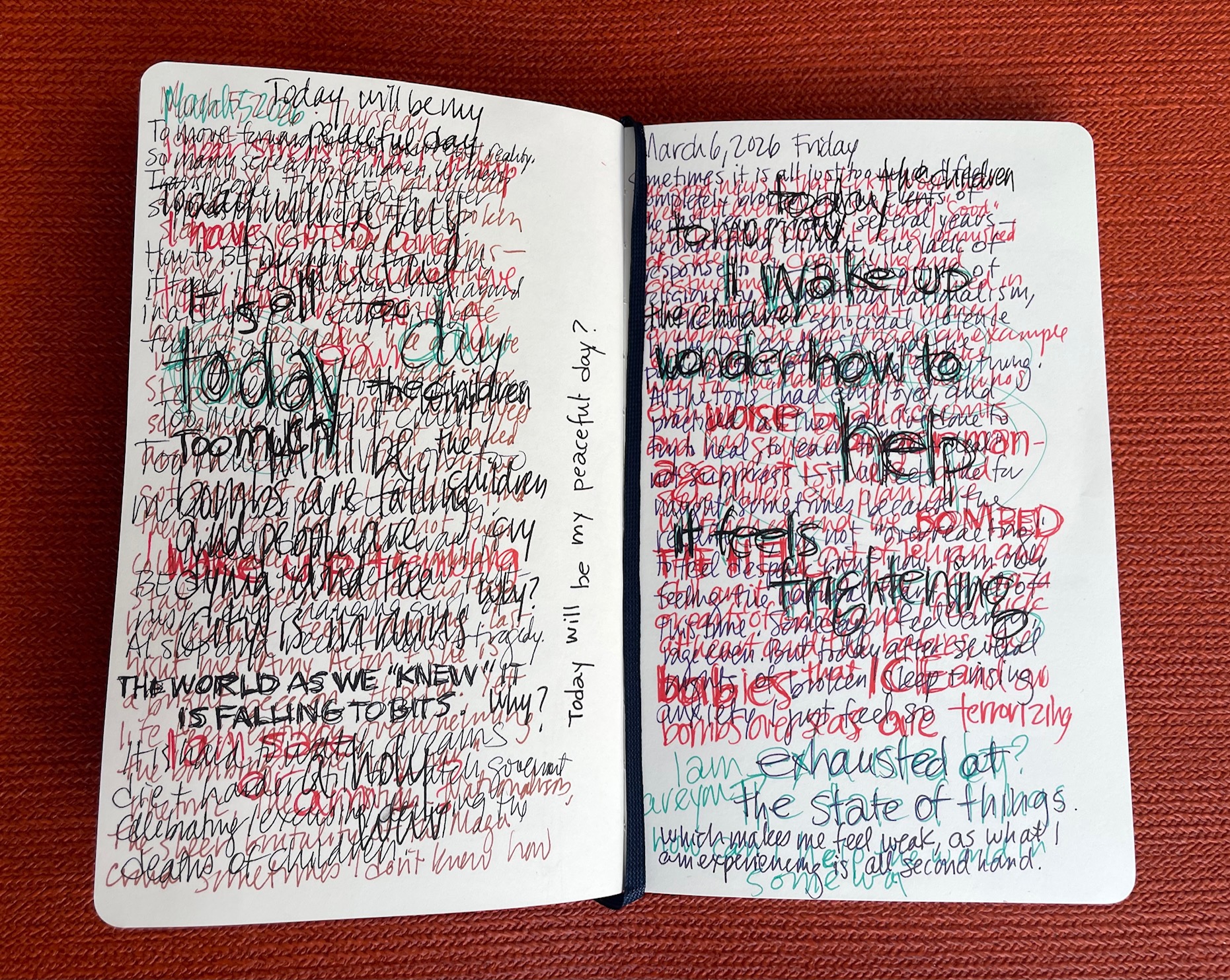
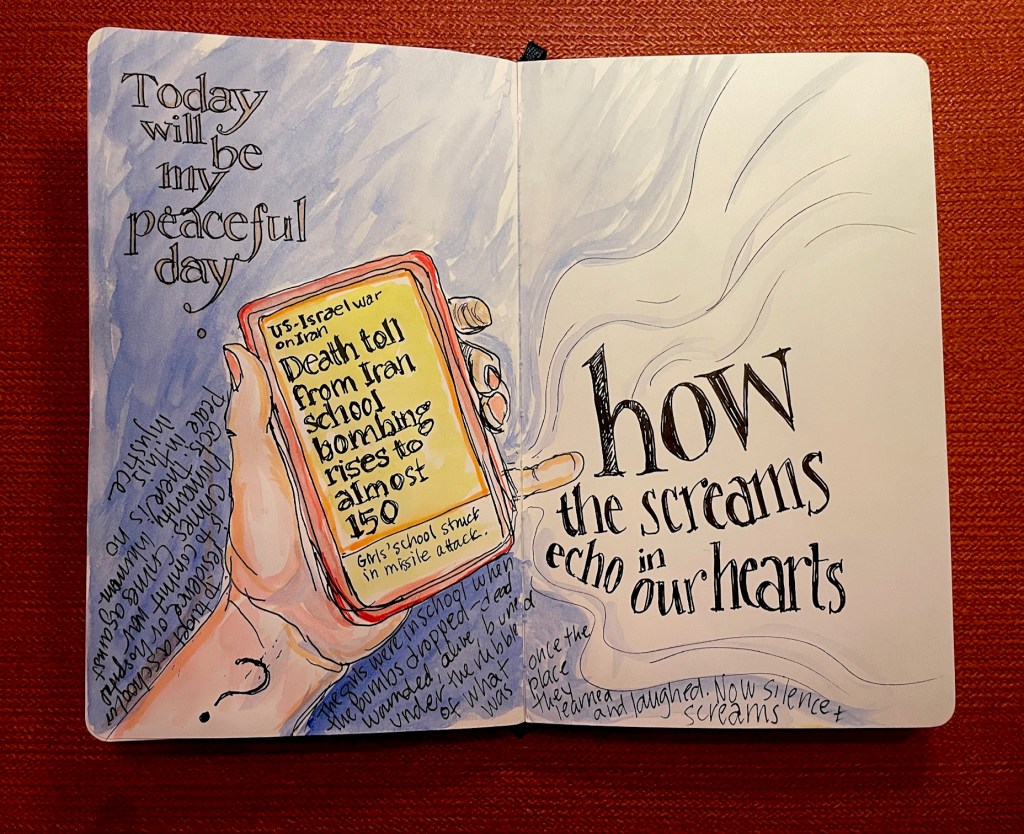
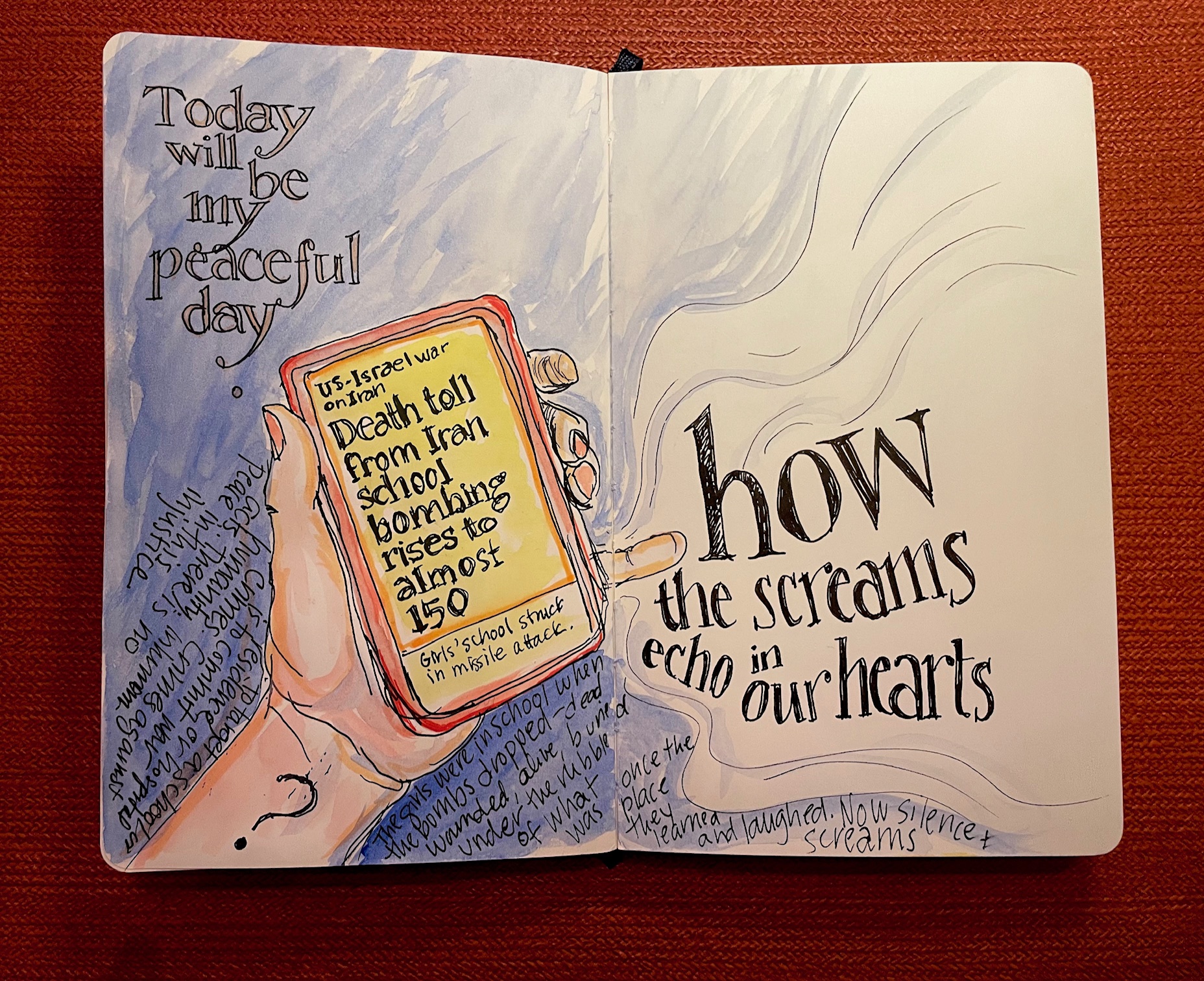
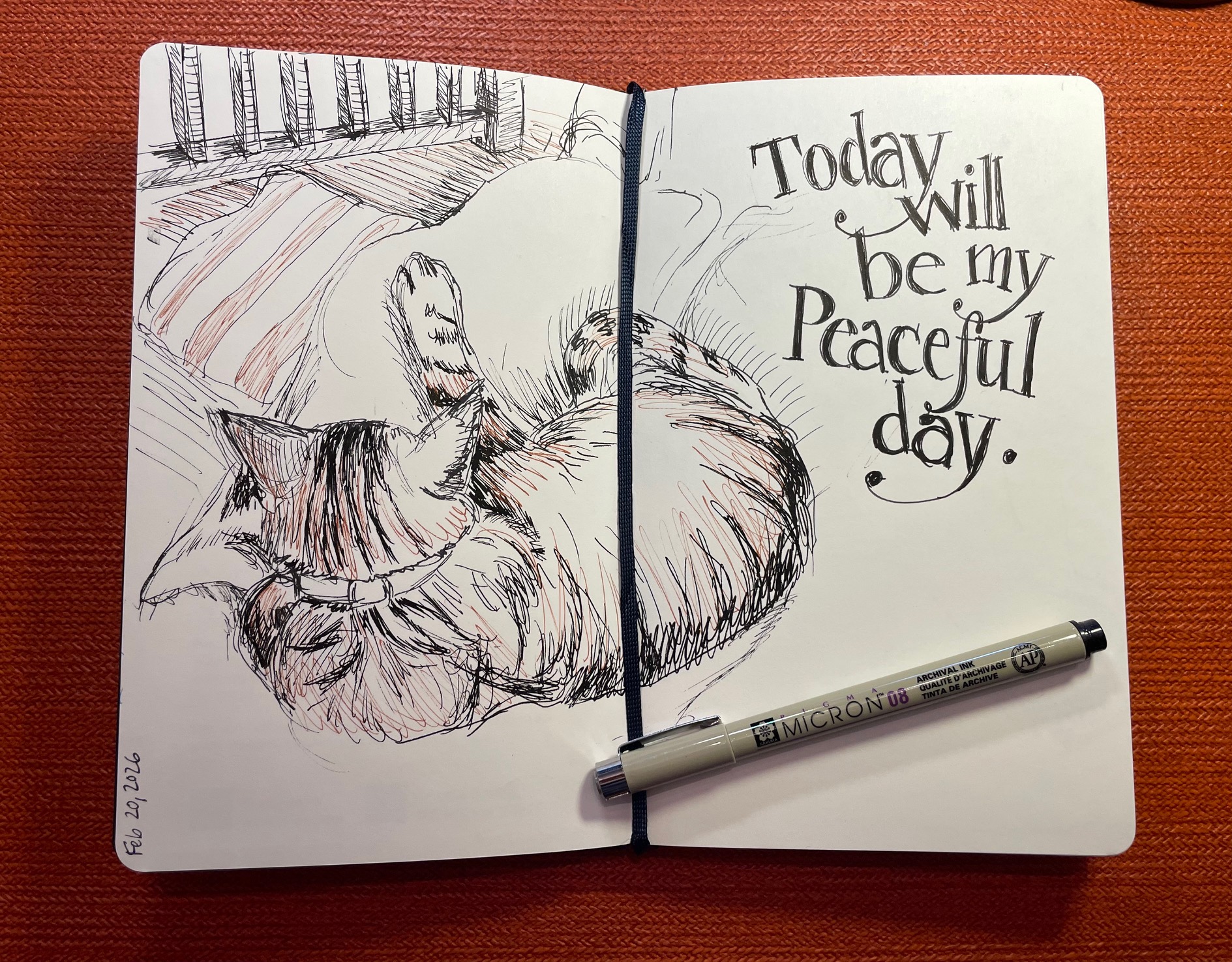
  • I watched a bit of good news a couple weeks back. You may have followed the progress of the Buddhist monks from Fort Worth, Texas, with their “Walk for Peace” spanning about 2,300 miles. Every day they held a ‘peace sharing talk’ at lunch, for anyone who wanted to listen. One of the talks really inspired me to adopt a new practice suggested by one of the monks. He suggested leaving your phone alone and not engaging with it until you make your bed, go to the bathroom, and write with pen on paper “today will be my peaceful day”.

    Feeling very downhearted the morning I saw this clip, of the Venerable Monk Pannakara and his talk helped me reframe how I want to start my days.

    Reflecting on his teachings, I realized peace is not a passive process. This is not an invitation to “check out” and numb ourselves. It is an invitation to feel and think and act from our hearts instead of in reaction to what our phones spark us to react to.

    Try it. Peace may be a rare quality these days, but we all have the ability to create and spread peace.

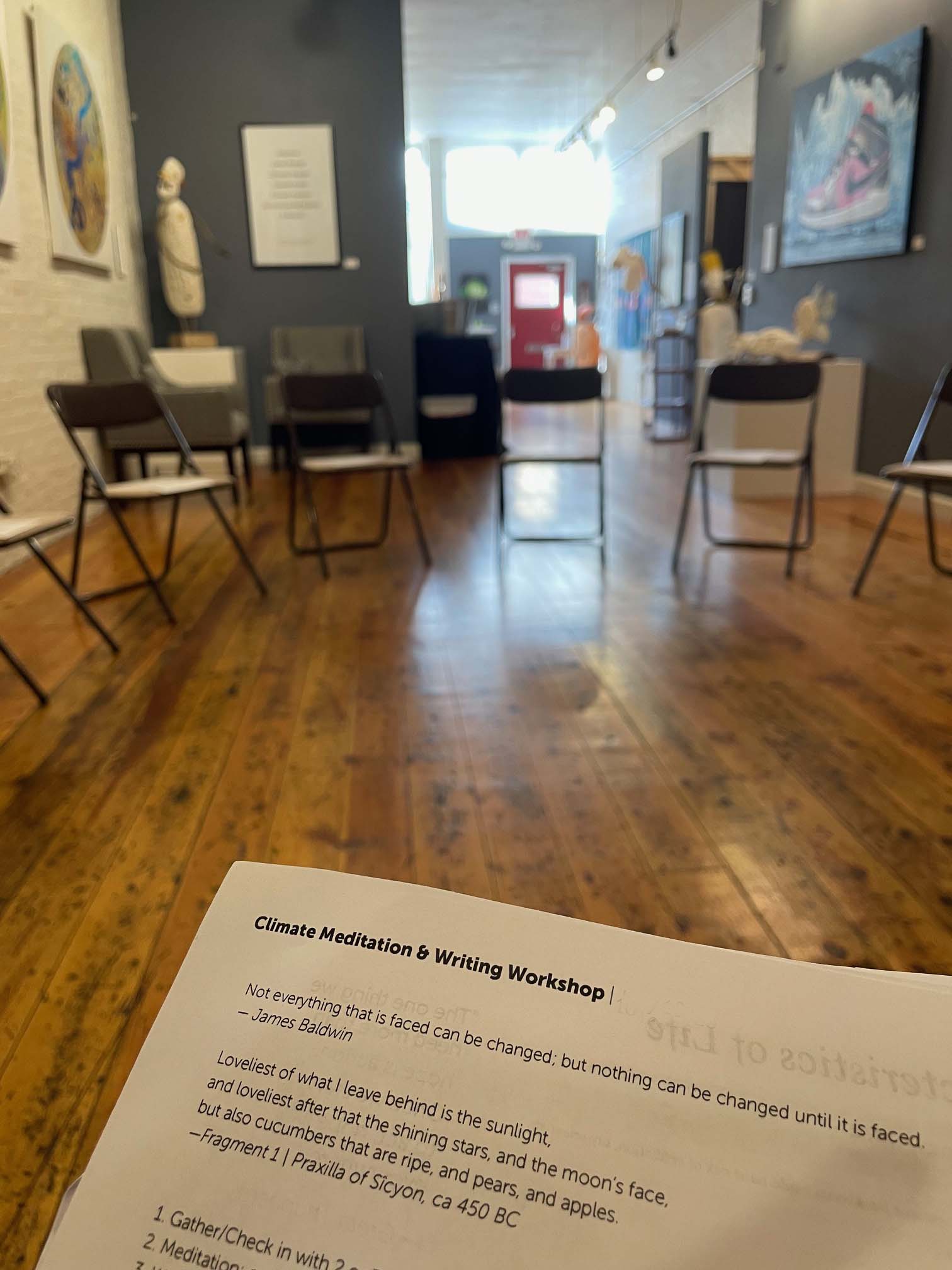
  • Meditation space in a beautiful art gallery.

    In May, 2025, the first session of Climate Meditation & Writing Workshop was held at Studio Kroner in downtown Cincinnati. It was part of All Else Pales 2, a month-long, multi-disciplinary exhibition exploring climate change, sustainability, and environmental justice.

    From the seed of this opportunity, an ongoing group has emerged!

    I facilitate our monthly meetings, which (generally) occur on the 2nd or 3rd Saturday of the month. This free (donation-optional) format includes a guided meditation and guided writing prompts. Both are suitable for any experience level in meditation or writing. Mainly: we build community, sit with whatever feelings arise, and then create together. Sharing what is written is optional–we all listen and support one another. This is a generative workshop! We write in community. Quite often, juicy writing emerges. But the main objective is the practice.

    Together we cultivate open-heartedness, awareness, and build energy and/or find solace. The idea is to draw strength so we may all help shape the best present and future that we can, however that looks for each participant. These practices are a great support for anyone concerned about the world we all depend upon and share.

    If you’re in the Cincinnati area and would like to be on the email invitation list for the group, contact me. I’ll give you a heads up for the next meeting. Would love to see you there sometime.

  • Flying Thoughts

    Last time I flew Delta, the napkin that came with my little cup of coffee proclaimed the airline had been “Carbon neutral since 2020,” which might lead you to believe they are not emitting carbon; there’s a class action lawsuit pending now, which Delta is fighting.

    The writer of today’s napkin blurb stayed in safe territory by touting that the napkin is made from recycled paper. Hopefully that much is true.

    Flying adds greatly to the carbon footprints of already heavy-footed westerners like me. And yet, with a sprawling family in a sprawling country with little rail service, I choose to fly sometimes.

    But I’d rather not comfort myself with greenwashed fantasies of carbon offsets.

    As the plane descends below the clouds, I see curving streets and cul de sacs scarring the earth below, labyrinthine, eerily reminiscent of the patterns carved by ash borers, who are born to consume what sustains them.

  • Introducing: Climate Journal

    May this be a year of questioning and seeing and being and responding to what needs attention.
    A year to nurture love, a year to take action.

  • The Invisible Suitcase

    I’m pleased to announce the publication of my first poetry chapbook. I hope you’ll check it out on Amazon or (better yet) at the publisher’s website, to support small business! https://www.finishinglinepress.com/product/the-invisible-suitcase-by-elaine-olund/

  • image of poem and writing paper

    Power Outage, August 20, 2019

    I like the sound of the cars, passing lonely on the rainy afternoon street, the way the sound of the rain rises up like a wave crashing, then falls softly to patter. I like the way the Catalpa dances, tossing her branches like girls toss long hair.

    I wait for the power to surge back, for the refrigerator to chime in with the cicadas and crickets cued up by a pause in the rain, I wait for work to resume and life to go back online.

    Far away, an alarm siren is hyperventilating, wailing up and down, hiccupping distress. Birds sing and then go silent as the rain begins and thunder rumbles again; chirping and trilling rise up as the sky dries.

    The lights flicker on, and with them, low drone of machines waking and then gasping dark and dumb as the power drops out again. Nature rushes to fill the vacuum of quiet, thunder’s rolling again—or is it a dump truck, rumbling up Hamilton?

    I like the feeling I have of being all alone, floating in a bubble of sounds that stream around me, under me, over me, as if I am bobbing in a warm river of thrum and strum, rattle and hum.

    Across the street, Mary’s raspy voice floats, softened by the weather, “Hey,” she asks her next-door neighbor, “Hey, is your power off, too?” She sings the syllables. Fading rain pats the roof, gently, gently. The catalpa sways slowly now, back and forth, back and forth, steady, steady, like I swayed when I held my babies long ago.

    I close my eyes, remembering the feeling of baby skin against my chest. Suddenly Mama’s right next to me, as if the storm has swept her into the house like a wind-sucked sparrow. Eyes closed, window open. Breeze tickling. We listen to the clouds lifting, to the birds calling. We take turns guessing Goldfinch or Cardinal, Robin or Wren, some silly game we began in 1992 and take up this August afternoon as if nothing’s changed, as if no time has passed, and nothing is ever lost.


    This was the result of a two-part prompt. In a nutshell, part one is listening, eyes closed, for 6 minutes. Just breathing and listening, noticing whatever sounds are present. Part two was reading the poem “Aware” by Denise Levertov, then beginning a ten-minute fastwrite starting with “I liked the sound”.  (one of the phrases from the poem). Any poem that focuses on sound or listening would work for this two-part prompt. Try it and see what happens.

  • photo of chalked quote by James Baldwin on a panel.
    James Baldwin quote rendered in chalked calligraphy by David Ostrowski, in Newport, Kentucky. Photo by author.

    “Not everything that is faced can be changed but nothing can be changed until it is faced.”

    —James Baldwin

    I was struck this morning by the feelings that came up in a fastwrite about childhood. After reading it over, then turning to a review of recent news, I felt the endless echo of bullying and othering playing out in rallies and in life.

    I often wonder where our deepest fear are born; they seem part of us, inescapable. The fears that make us hard-shelled and defensive. The fears that make us withdraw and give up, and/or also make us into playground bullies, ugly-spirited and hurtful, or into the bullies’ sidekicks. It is the sidekicks who truly make this bullying possible.

    No bully acts alone.

    The chants of recent rallies are primal, terrifying, and I feel them deep in my heart. They are not the healing chants of love and truth.

    “Send her back.”

    It’s a chant of othering, of ostracizing. It is racist, it is damaging. The enabling of this damage is as bad as the chant itself. Fear-driven, it can feel like your choice is either to join the bullies or be a victim, like a cruel playground game played out forever. Social ostracism is a painful tool of control. Enabling—being the sidekicks, looking the other way, feeling disempowered to speak out—is how it becomes systemic. Hungering to be accepted, we might compromise our values. Do we value love? Equality? Inclusiveness? Or are those things just fantasies to make us feel better as we choose to enable and/or behave in ways that are not loving at all.

    We contain our selves at all our ages, but we are not controlled and powerless like little children, unless we permit it. Unless we haven’t faced the fears that drive us.

    There is a third way. You can face your enabling behavior. You can rise above your fears, and the people I am most talking to here right now are people who are white, and looking away from blatant racist behavior, hoping to avoid having to choose.

    Choose. Choose to be the grownup on the playground, and speak for fairness, for equality, for justice, for humanity. Speak against racism and xenophobia. Do not let the blanket of powerlessness put you to sleep. The world depends on you to be awake. It is not nap time.

    The prompt I used was “I smelled fear.” and as always, I wrote from memory and imagination. Maybe you could try a fastwrite on this, too? Or on “Send her back.” Do it as a wake up call, looking at your fear instead of being driven to unforgivable enabling.

    For what it’s worth, the fastwrite:

    I smelled fear, and I think it was my own fear. It smelled like bazooka bubblegum mixed with Love’s Baby Soft lotion with a cloud of chalk dust mixed in, from the erasers that Angie—dull, backward, awkward Angie—was pounding together. If I didn’t move away from her soon, I’d be branded a social outcast, like she was. Why did she have to come over here, anyway.

    I was in grade three, I was new, I said “soda” when everyone else said “pop”—I kept forgetting to say “pop”—and yet even I knew I needed to step away from the sidelines, where Angie liked to hide. I needed to try. Just enough to be marginally accepted.

    We were on the playground outside the low-slung flat-roofed elementary school, by the big windowless brick wall where games of Dodgeball raged. Groups of kids were forming; the game was about to commence. At least in gym class I’d be chosen, maybe almost last, right before Angie and Karen and Bob—almost last but not dead last. But on the playground, you could be not chosen. Angie chose erasers, Karen sat reading a book next to Mrs. Schultz, the playground monitor who never looked up from her romance novels, their covers hidden behind ugly floral quilted covers, but once I’d seen a nearly naked lady, swooning backward onto a nearly naked pirate, when the cover slipped. Mrs. Schultz had a whistle around her neck but she was afraid of the boys, and never blew the whistle on them.

    Waiting to be chosen, and dreading it, too, I tried to look busy, to look cool. I studied the ants crawling in the cracks of the asphalt by the jungle jim, then worried I’d be branded as the ground-staring-girl. I looked up at the cloudy October sky and worried that I’d never find a friend.