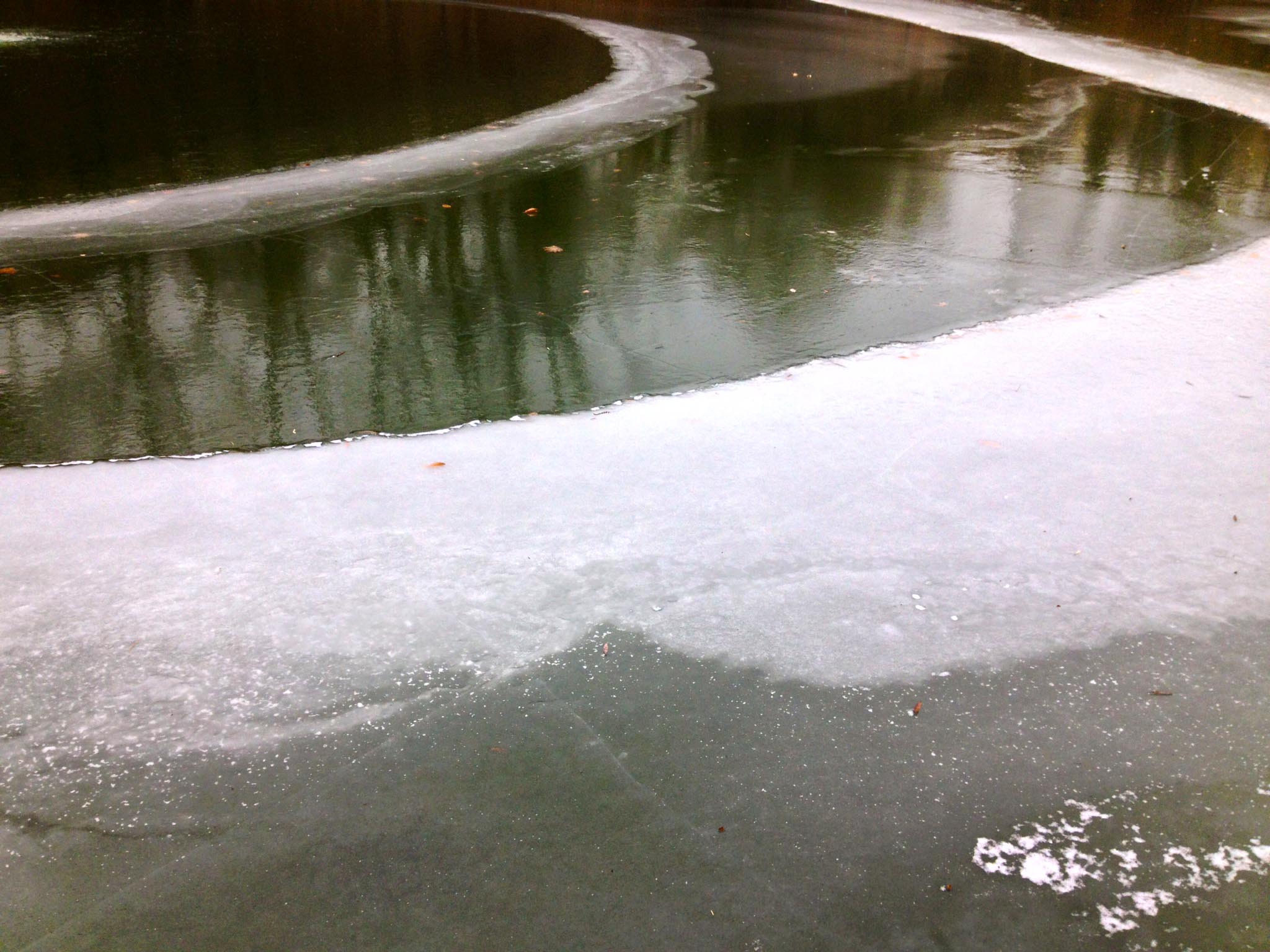
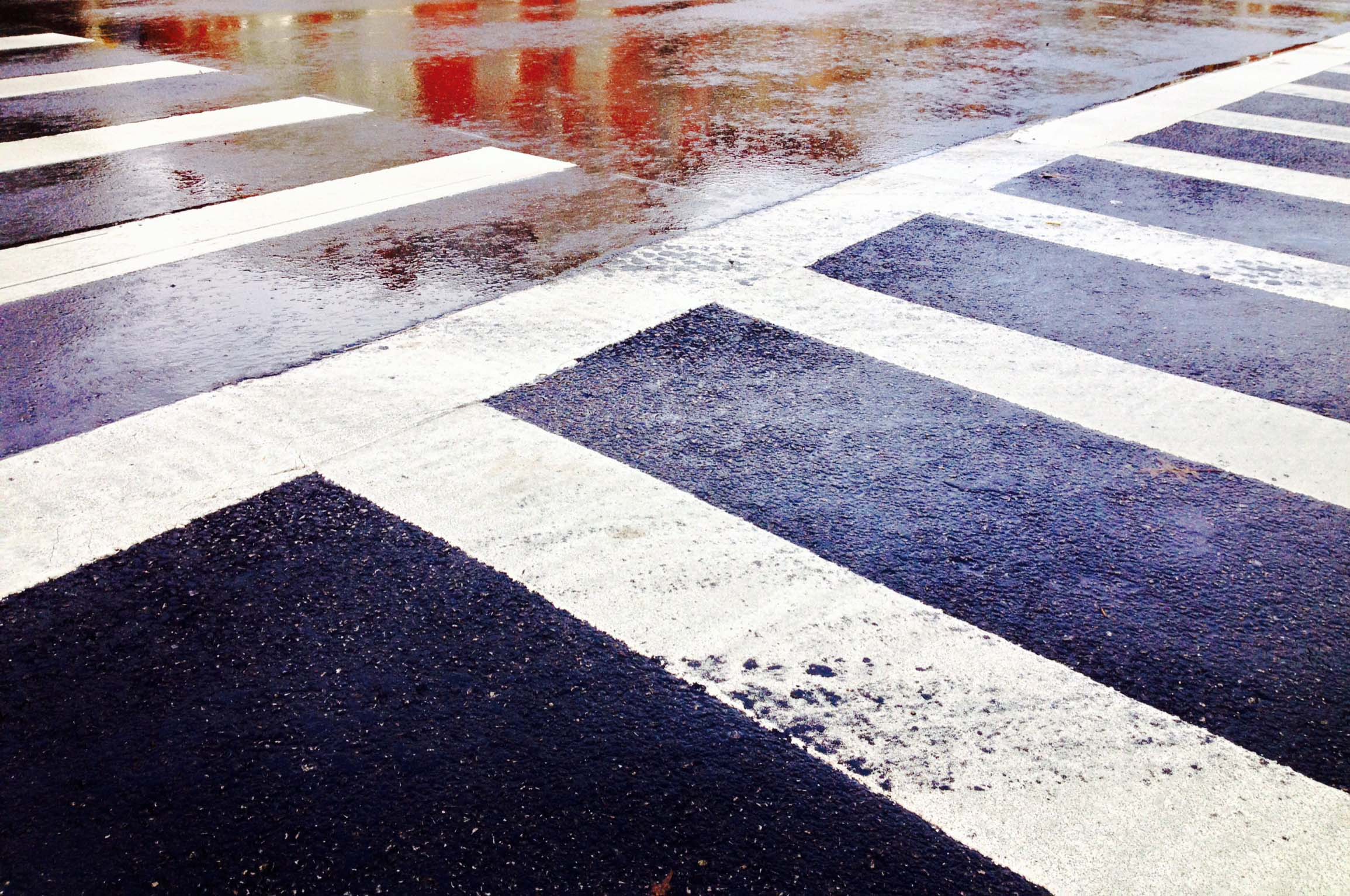
• An intersection, not far from the zoo.
    An intersection, not far from the zoo.

    Howler monkeys howl
    sing lonesome songs in the rain—
    carry me away

  • photoHigh tide in yoga class

    Now it’s time to let go of anything that
    does not serve you, she says
    I sink into the stretch

    Breathe in peace
    Breathe out pain
    Harp music: a lullaby melody

    Hush a bye, don’t you cry…
    I hear my long-ago self crooning,
    round baby latched to my breast

    Blacks and bays, dapples and grays
    All the pretty little horses
    When you wake, we’ll have cake…

    Oh, I feel such an ache
    Joy and despair, inseparable twins
    Brightness paired with brackish dark

    Time to curl up, like a fetus
    a reminder, she says, that we can always
    begin anew

    Anew floods me. It’s high tide in Ohio
    deep-etched patterns melt as awareness swells,
    crests—suddenly, I taste salt

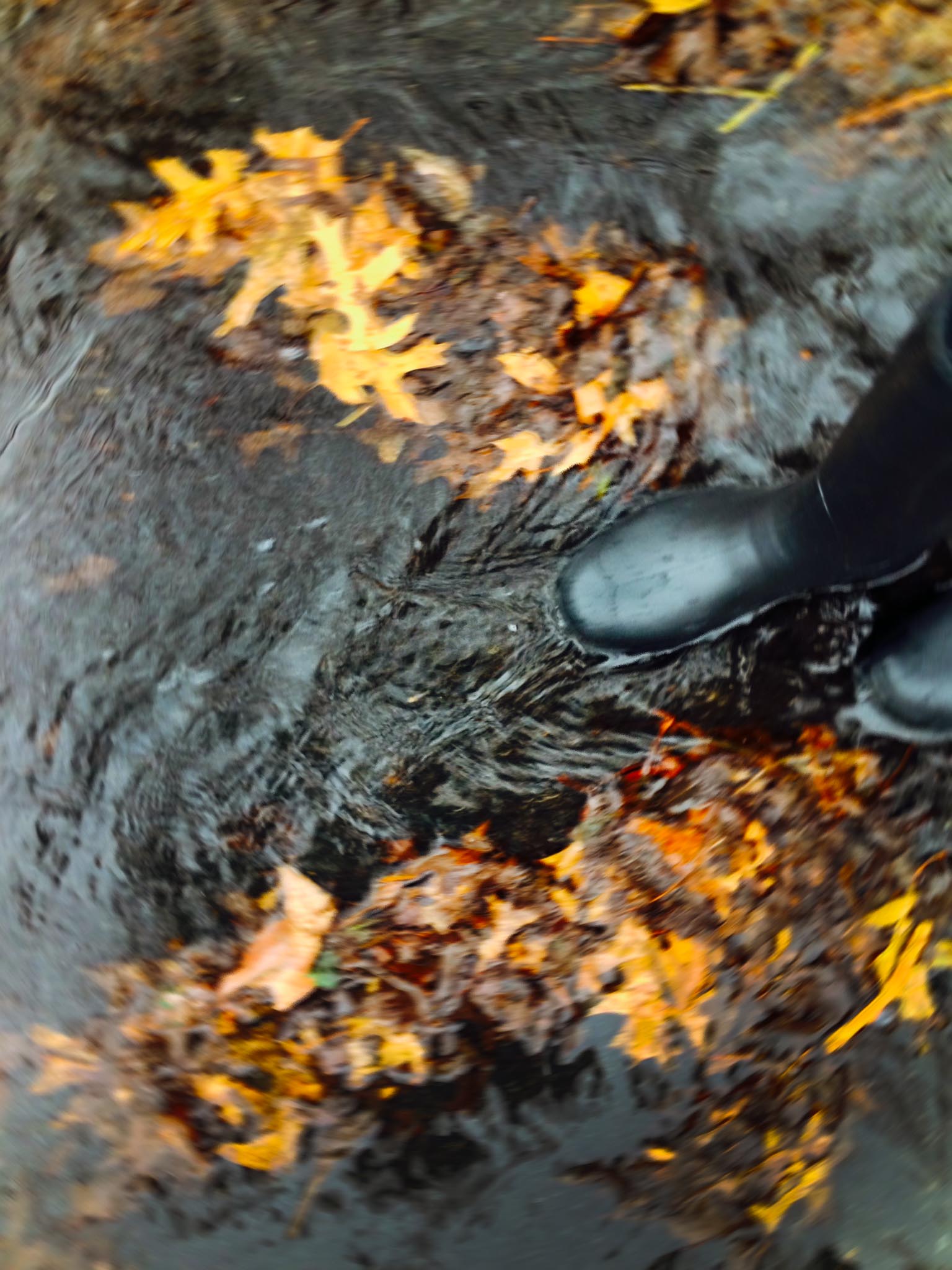
  • bootsIt is the last day of Autumn, a cold, thick-oatmeal gray day, and finally: I put on my rubber boots, and I’m raking leaves. It’s the first time since mid-October that the sleeping leaves have been disturbed, and I quickly realize it’s a bigger job than I thought it would be.

    I live on a beautiful street in a center-ring suburb, one of my city’s first suburbs, with century homes and century trees—both the houses and the trees are big and sturdy. Maples, oaks, sycamores, beeches, mulberries, pears—their leaves fell all fall, layering up, narrowing the front walk until suddenly it was just a forest footpath. The decaying leaves built up along the edges of the walk, damply clinging and narrowing it like plaque in an old artery.

    So I rake, scrape, pile and gather leaves up on an old blue tarp. Pile, lift, carry down the drive way and across the backyard, heave-ho up over the fence, letting the leaves cascade into the ravine. The heaviest clumps of wet leaf mold settle in the folds of the tarp, reforming into a mass with heft, like a body. I know now how it feels to lift and dump a body.

    Over and over, I rake and repeat, dumping body after body into the grave of the old stream that used to run through here. All the while, I play a Patty Griffin song in my head. The song is “Making Pies,” but I have reworked it to suit my task.

    You could cry or die
    Or just rake leaves all day.
    I’m raking leaves
    raking leaves
    raking leaves
    raking leaves

    This song makes me smile, on this, the nearly darkest day of the year. I can’t carry a tune, but I’m singing aloud because it feels good. (And also because no one else is outdoors! The neighbors all use lawn services, and I’m sure they will be thrilled to see I’ve finally decided to reclaim my yard from the wild woodland drifts.)

    It strikes me, on this shadow-less day that is soft-lit and diffused, that there have been brighter days when I’ve been unable to see the very sharp shadows right in front of me. The shadows that are part of me, and of all of us. I was afraid of my own shadows, my long, looming shadow side that I now know is there to help me understand the light.

    What joy there is in sharing darkness, in holding it up instead of pretending it doesn’t exist. I tried that—‘thinking positive thoughts’— and while I’m all for gratitude journals and happiness projects, I now see that you can’t dump the shadows like bodies. You need to hold their hands and embrace them and honor their existence. And then be grateful for their lessons.

    I am so grateful for every beloved fellow traveler, my dear friends, both new and old, who showed me their shadows, and gently helped me see that mine are just part of me, and nothing to be ashamed of, nothing to run from. I thought pain was something I could or should try to skirt. Your shared darkness brought such bright light.

    Darkness is as beautiful in its way as light. It is a sharp thing, brittle and bitter and raw and rough and dark and painful as wet bark scraping your skin when you are running from things and you fall into arms waiting to catch you, and you feel held, and warm.

    That’s when you see the light in its brightest form: when you are so cold your teeth are chattering and tears are freezing on your cheeks and you are enfolded in a hug that feels warm, like a blanket straight from the dryer, wrapped around you, and you take a breath, and know you will be okay.

    Even when the arms that hold you are your own scraped-up arms, and even on the second-darkest day of the year.
     

  • A new poem of mine is up over at everywritersresource.com.

    Check it out at:

    Fossils by Elaine Olund

    I am grateful to my amazing friends who patiently listen and give me a safe place to begin to find my voice. I appreciate everyone who takes the time to stop here on my blog now and then. It is such a gift to be heard. Without your encouragement I would be lost, or at least a little more lost than I generally am!

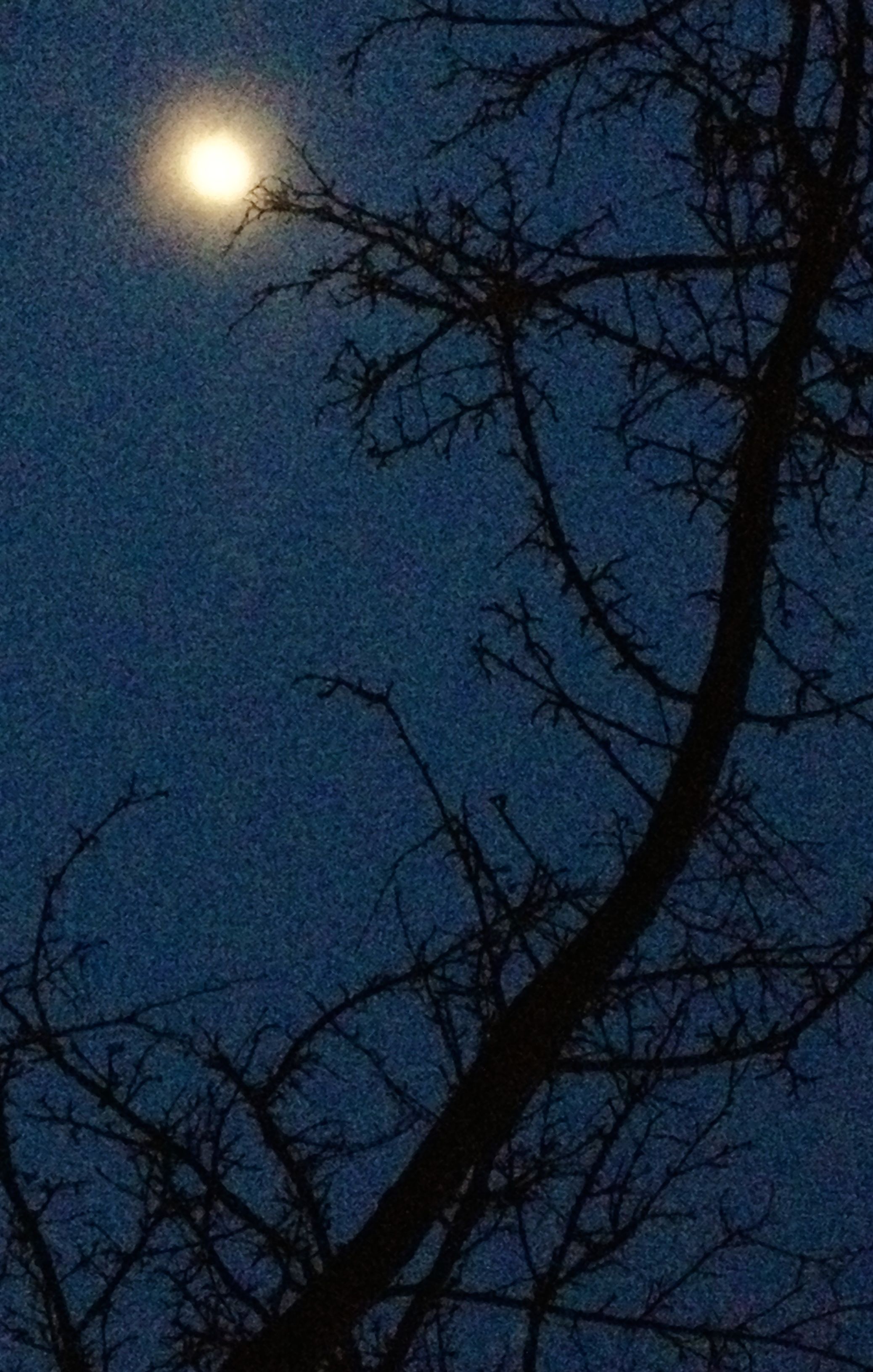
  • star photoPer aspera ad astra
    (A rough road leads to the stars)

    Oh, darkest secret, deepest fear:
    I’m afraid I’ll never see the stars
    Shining again—
    Per aspera ad astra

    A little prayer
    Warm-breath whispered in my ear
    By the blind innocent within
    Who believes in light she cannot see

  • swimming poolI don’t know how I stayed away from the water so long. A (very) minor surgery interrupted my habit of swimming 50 or so laps in an indoor pool, a half-hour meditation for me, where I immerse myself, literally, in a flow of stroking, kicking, turning, pushing off, all the while counting out the laps over and over.

    I swim as hard as I can. I am not a particularly fast swimmer, but I swim steadfastly. Speed is not the point. I concentrate on feeling my body in the water, on form, on breathing, on the dreamy beauty of the watery blue beneath me, on the mosaic-tiled black stripe I follow back and forth, back and forth.

    Even so, stray thoughts inevitably bubble up, little silvery bursts, like my underwater exhalations.

    They say when you are drowning your life flashes before you. I’m not drowning, but life has had its flooding moments lately. Last night as I pushed hard off the wall of the pool, the things I once was certain of flashed through me, more like a current of feeling than a vision, beginning with the childhood certainty that my mother would always be there to love me.

    Certainty is an illusion, yet we think sometimes—most times—that illusion is truth. These illusionary truths, these certainties we cling to, like life preservers on a choppy sea, are the very illusions that will one day have us gasping for air, trying not to drown.

    The last lap brought it home. Certainty is an illusion; Illusion is truth—So nothing’s true? I buried this tired and hopeless thought. I slept hard, and woke feeling fragile.

    Then this morning, I heard a line from one of Gregory Orr’s poems, and I dove into some of his poetry and these stanzas floated up:

    Grief will come to you.
    Grip and cling all you want,
    It makes no difference.

    Catastrophe? It’s just waiting to happen.
    Loss? You can be certain of it.

    Flow and swirl of the world.
    Carried along as if by a dark current.

    All you can do is keep swimming;
    All you can do is keep singing.

    –Gregory Orr

    (from Concerning the Book that is the Body of the Beloved)

    And somehow these words comforted me, and so to my swimming-mind puzzle there is now a hopeful ending (thank you, Gregory Orr):

    Certainty is an illusion; Illusion is truth.
    All you can do is keep swimming; All you can do is keep singing.

    I’m not certain of hope sometimes, but I’m also not certain of hopelessness. Maybe uncertainty is truly the gift, after all? With that thought I turn, push off, keep swimming. It is just enough to make my heart softly sing as I kick and breathe my way through this watery December afternoon.

  • “I don’t understand,” you commented, “how is it racist?
    If those kids were raised right—they wouldn’t be shot.”

    Raised right, commenting friend?
    I choke on my anger
    but I’ll try not to judge you
    I used to believe in TV news and fairy tales, too, but now
    I want you to imagine reality.

    Imagine it, commenting friend,
    you, who probably hunt ducks or deer with
    your stocky white son, tramp the countryside
    waving shotguns and rifles, never imagining:
    your son executed for playing with a pellet gun

    Imagine it, commenting friend,
    imagine your son, gunned down, then framed for his own murder
    imagine your daughter, trying to save her little brother
    imagine some asshole, hundreds, thousands of assholes, saying
    you raised him wrong

    Promise me, commenting friend
    you’ll imagine your son, wide-eyed with fear, as he bleeds
    turns the snow beneath him pink, then red, while his sister
    who ran to save him is tackled and bound
    as the officers stand, hands on hips, not even pretending to help

    Imagine later, commenting friend
    when you, rightfully outraged, sick with grief
    wait for justice
    surely this time, this time—an indictment? It’s all on video!
    He was just twelve, playing alone—surely this time, this time?
    Tell me now, commenting friend
    Do you still think it’s not a race thing?
    I’d rather reach your heart and change your mind
    than leave you untouched while children are shot and left to die.
    I bleed out, listening to you who was “raised right.”

    changingthings

    NOTE:
    3/2/15: This is a second draft of a poem originally published 12/6/14. It is quite different from draft one, and I think it says what I want to say more accurately.

    Tamir Rice was playing with a pellet gun on a Cleveland, Ohio playground when someone called the police. The caller told 911 that the gun was “probably fake.” Surveillance video released by the police shows the officers’ car pulling up right next to the boy, and shows an officer shooting Tamir in the stomach within seconds of pulling up. Tamir was 12.

    Officer Loehmann, the shooter, was not indicted.

  • Icantbreathe


    Chokehold

    “I can’t breathe!”
    Eric Garner’s last words,
    gasped as Officer Pantaleo’s hands
    squeezed his windpipe shut.

    “I can’t breathe,” Garner pleaded
    as he died, begging—
    every cell in his body
    screaming for oxygen.

    “No reasonable cause,”
    said the D.A.,
    when the grand jury choked on logic
    refusing to indict even though

    the medical examiner ruled
    Garner’s death a homicide.
    “I can’t breathe!”
    protesters chanted.

    “This fight ain’t over, it just begun,”
    said Esaw Garner. In her voice
    I hear every cell in her body
    screaming, begging, pleading for justice.

  • photo
    New Albany, Indiana


    I have been eating poetry

    Wildly gorging on it,
    like it was chocolate, and you know—

    I cannot keep candy in the house.
    I’d be fat as a tick, as Mama used to say.

    Poetry is calorie-free, sweeter than syrup
    but sometimes so bitter it stings going down.

    I sat alone in a softly-lit hushed restaurant last
    Saturday night, reading poetry, poetry, poetry

    and savoring vegetarian chili, roast carrots and
    a cold brown ale.

    There is no happiness like mine:
    so much poetry—no room, even, for dessert.


    (An ode to Pulitzer Prize-winning poet Mark Strand, who died this week.)

  • I saw a picture of
    Michael Brown’s mother
    as she heard the verdict.
    I felt her mother’s pain
    radiate into my heart,
    into my safe flat-screened life
    a roaring scream—
    and with the pain,
    my own weak shame:
    in my white-bubble youth
    I was taught justice would be served—
    to everyone, it says so right here.

    No. Justice fled, unarmed
    was shot dead
    in an alley
    on a street
    in the dark
    in the night—
    Justice was too threatening,
    I think that was it?
    Justice was gunned down
    in a hail of close-range verdicts
    excusing the inexcusable:
    racism denied is still racism.