• impermanence
    Elm tree, blue sky
    Farewell, beautiful.

    I’m going to say it straight out. Somebody’s going to die tomorrow.
    Actually, I’m sure, lots of somebodies will die, but there’s one in particular
    that I’m thinking of tonight.

    Nothing lasts forever.
    Joy comes, and goes.
    Seasons come, and go.
    Grief comes and goes, too.
    Whole countries, entire species,
    blazing stars in the sky—
    come and go.
    Tomorrow the elm tree outside
    my west-facing windows will be taken down.

    Chain saws will whir and bite.
    It will be fast, the end.

    Tonight I’m saying goodbye.

    I get it.
    It’s become dangerous, the elm.

    Too big for its place. It has to go.
    It could hurt someone.

    (Hurt is part of life)

    Joy comes, and goes.
    I will miss her outstretched limbs
    reflecting in my morning coffee in summer,
    I will miss her golden leaves in the fall.

    She healed me, that tree.

    I spent hours looking up at her.
    I owe her a lot, I think.
    I wish I could tell her:

    She gave me the gift of learning to just be.
    To laugh and cry and and let go of what was and be myself alone.
    (Though I suppose I wasn’t ever really alone; she was there?)
    I’ll carry her gift with me, planted like a seed
    rooting in my heart.

    I’m getting more comfortable with impermanence.
    Better at letting go.
    Better at grief.
    It’s just a tree, after all,
    a little piece of heaven,
    exhaling oxygen
    patiently teaching me how to breathe in life.


    The elm in my morning coffee.
    The elm in my morning coffee.


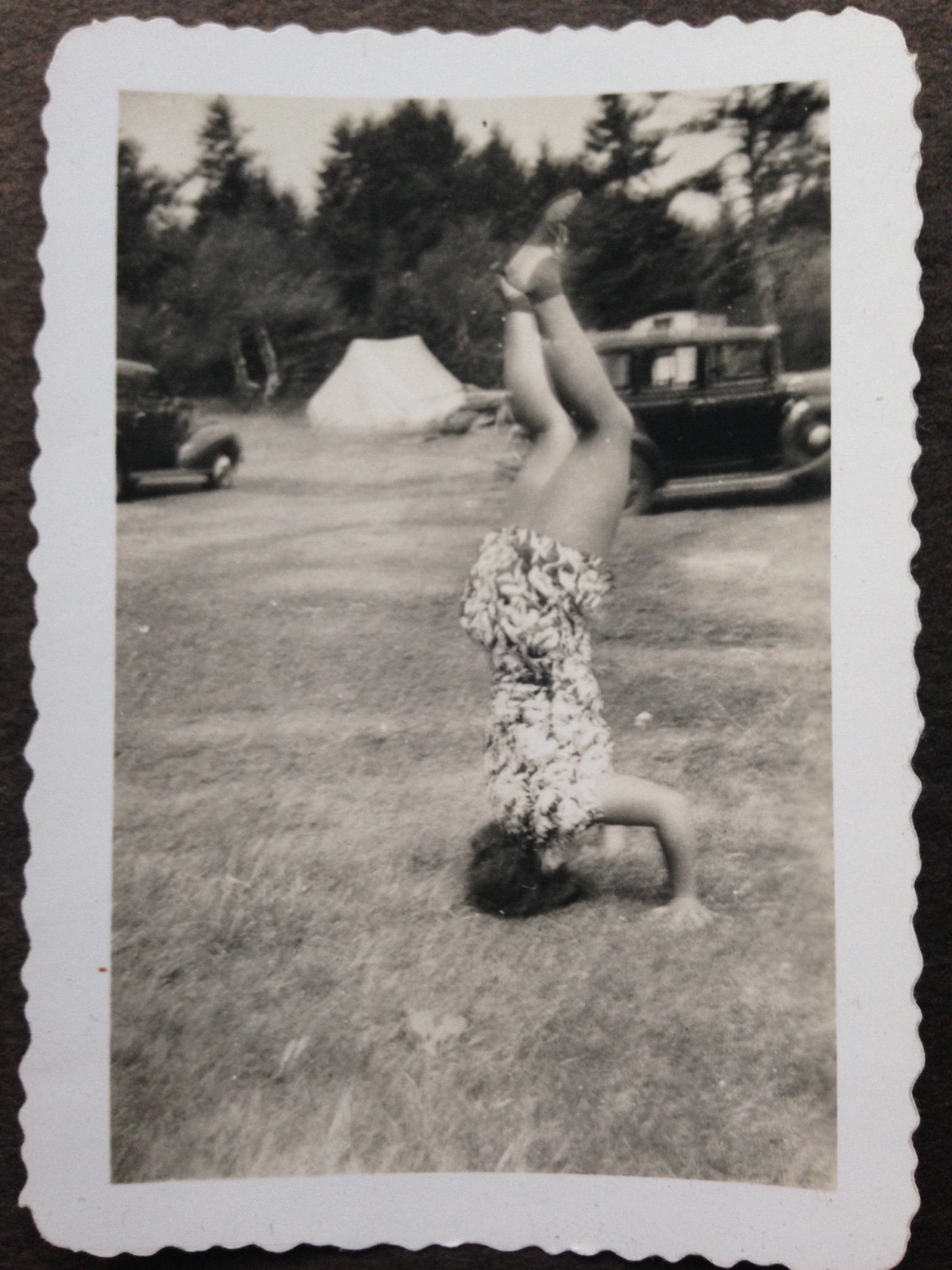
  • photo of my mother, as a young teen, doing a headstand
    Barbara Stone, sometime in the late 1930s.

    It’s your birthday, Mama. In the picture you’re about 12 or 13, but you did headstands for as long as I can remember. When I was a teenager, I lived in fear of your doing one when a friend was over. The other mothers didn’t do things like that.

    I’m beginning at last to see you more fully, twenty-five years after your last earthly birthday. A truer picture emerges as I learn more about life, about myself—maybe it’s you coming clear or maybe it’s me? But the veils are falling away.

    For a long time, I kept my memories of you behind those veils, blurring the edges and obscuring the painfully sharp details. The veils were garnet-colored, the blood-red of your birthstone. Looking at you through them softened the memories of you, made them pink and pretty as a sunset, and as distant.

    The summer I was eighteen your anchoring roles were torn away. Your last baby (me) off to college. And then: Dad died. I still remember the grief, suffocating and thick as the August air. Suffocating because we were locked into pretending to be strong and calm, you and I.

    At exactly the age I am today, you became a widow. And all these years later, I am a divorced woman. Funny how both of us emerged from long marriages, newly single at the same age. I feel a new kind of kinship with you. I guess our relationship isn’t over, is it? It’s true what they say: the people you love live on in your heart.

    As I find myself, I unearth pieces of you, and you continually surprise me, Mama. You are not all fierce hugs and pots of vegetable soup, not just chewy raisin-oatmeal cookies and games of cribbage and piles of books and papers everywhere, though I see you in my mail stacks and my habit of saving the tiniest bits of leftovers.

    I also find your “hot-spit” spirit in the shards of my anger, I find your ancient wounds, and mine, in my middle-of-the-night panics. I hear your voice sometimes in my dreams, and in shrill of my own voice, when I lose patience and boil over. Oh, I am fine, Mama. More than fine. Like you, I’m resilient and now: I don’t have to pretend to be ever-strong and ever-calm. I can just be me, roiling emotions and all.

    The last gifts you gave me are the ones I’ve spent the last couple years opening. Remember that night in the kitchen after your chemotherapy, in the window of time before you grew queasy, how you and I sat and you told me some things that maybe you never told anyone else, because I needed to know them?  Or maybe you told others, it doesn’t matter. You gave me what I needed to figure myself out. I didn’t quite know what to do with most of what you shared; I was embarrassed by your shame at your human failings. My own baby was stirring in my belly, and somehow I thought it best to push difficult things aside. Pretend it was all okay. I was afraid, you see.

    I told you not to worry about the things you’d shared, things that were hard for you to say. Personal things, confessions of your weaknesses. I dismissed them all away with a rushed out thank- you-for-telling-me. I put those precious words, the evidence of your humanness, your stumbles and triumphs that were just you and not my mother, into the bottom of my very deepest brain-drawer when you died. And I pretended I was ever-strong, ever-calm. I was carefully incurious.

    Silly, blind me. You meant to give me a shortcut, didn’t you? You were trying to let me know: it’s okay to be human, that falling apart—happens sometimes. That the key is trusting, and sharing, and connecting. Getting up, and forgiving yourself for falling.

    And all of that starts with not pretending to be strong or calm when you are not. It means not pretending at all. It was like in the Wizard of Oz, when Dorothy realizes she’s had the power to go home all along. Pretending to be what we are not, to deny who we are, drives us into very lonely territory.

    This year, I finally learned how to do a headstand. Like mother, like daughter.

    I’m so glad, Mama, that you are still here, in my heart, while I figure things out.


  • 11703574_10207310081527376_9128149954750898429_o

    Louise Erdrich says in her poem, “Thistles”:

    “under loss and under hard words,
    under steamrollers
    under your heart,
    it doesn’t matter. They can live forever.”

    I think there are some feelings that are like thistles, that’s why Erdrich’s poem and the thistles along the sidewalk speak to me like an old friend as I ponder how some losses, some griefs, some pointy bits of the past never do entirely smooth over or disappear.

    They simply die back for a while, and you think they are gone. Then you’re innocently snapping a photo, minding your own business, and they come back—sharp as ever.

    But they are beautiful, thistles are. They endure for a reason.

    You can read her whole gorgeous poem here:
    http://writersalmanac.publicradio.org/index.php?date=2007%2F06%2F22

  • woman in sparkly dress at night
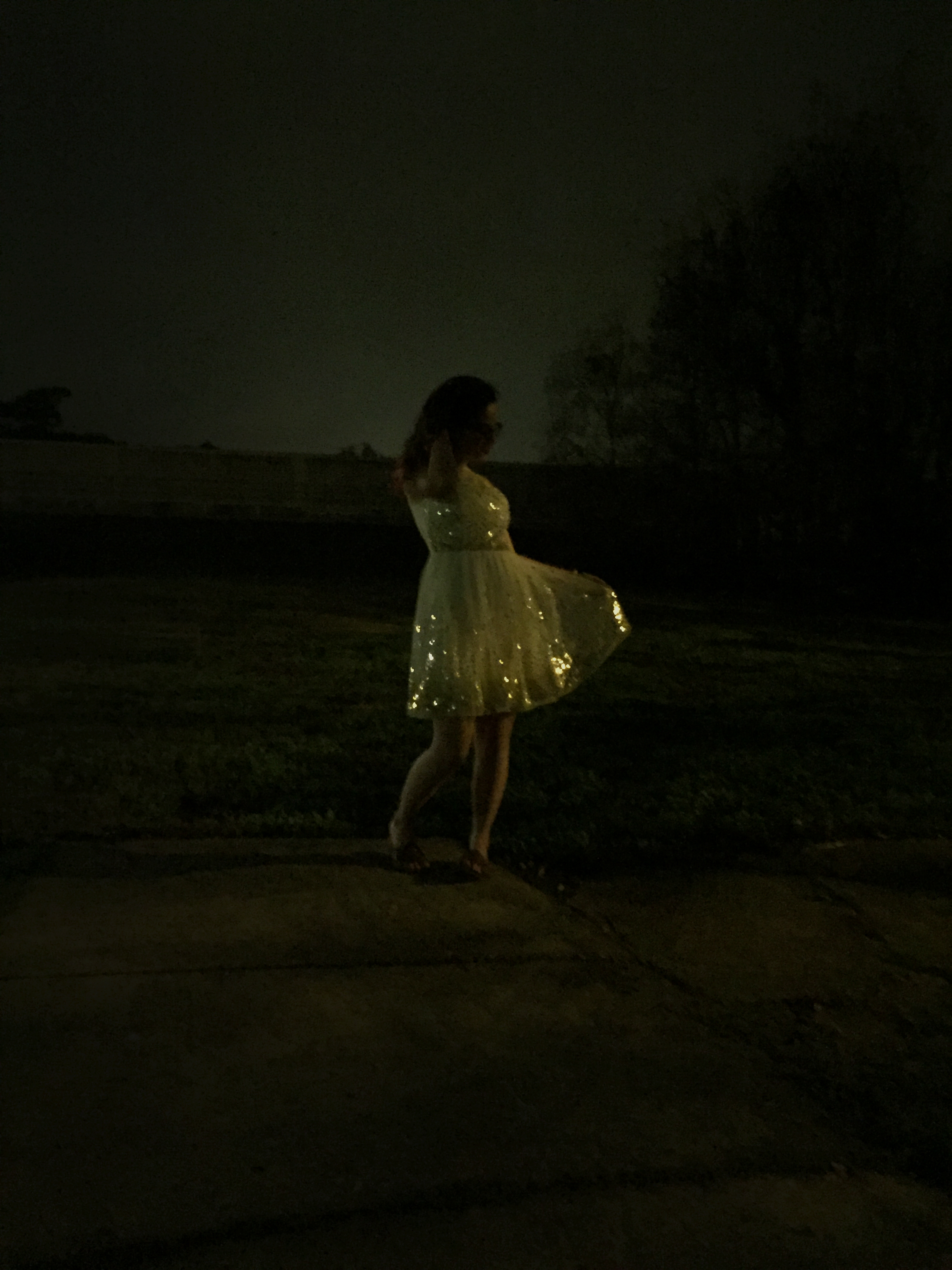
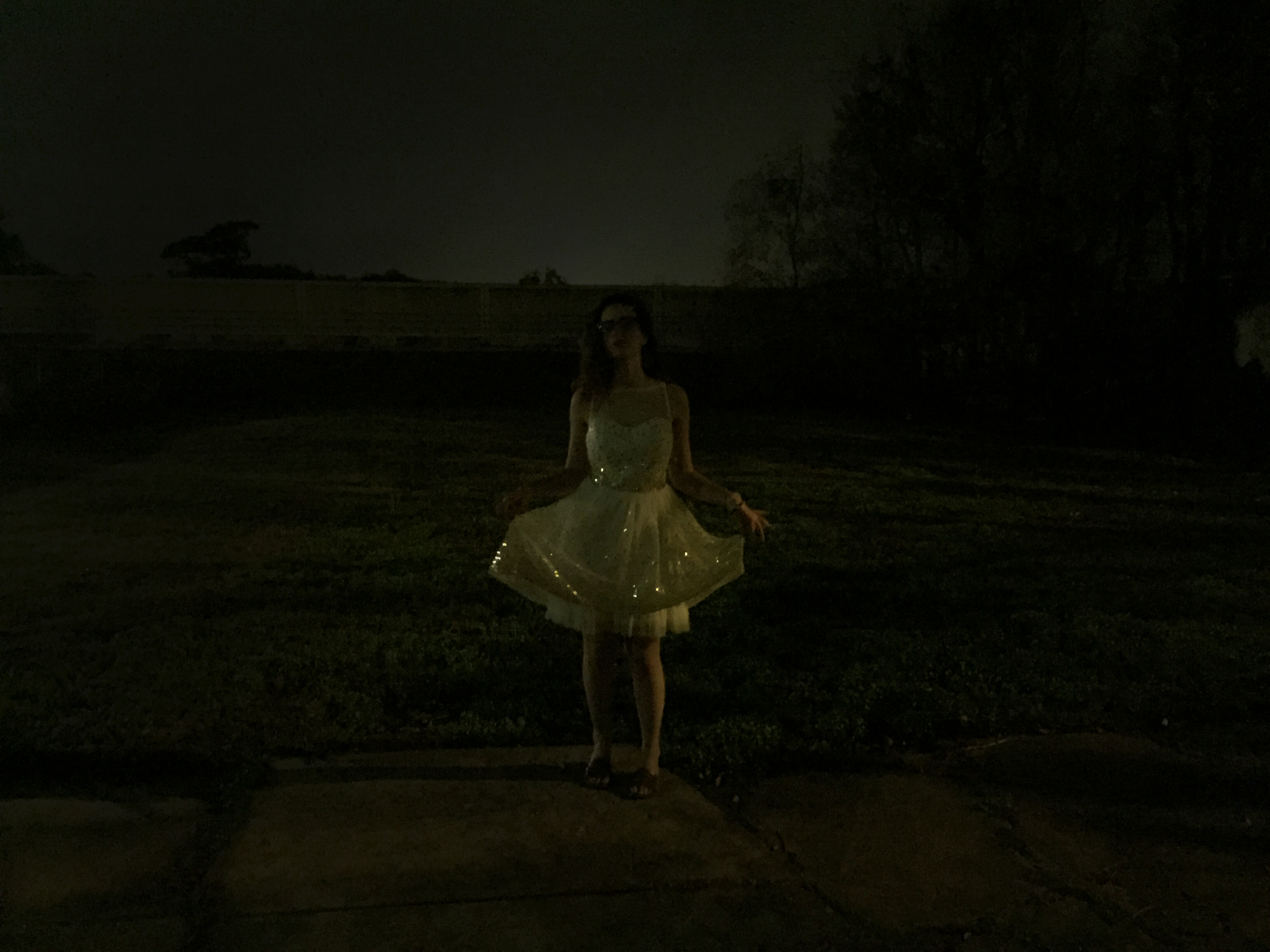
    Christmas Night | New Orleans | Gentilly | Lit by a streetlamp

    Last year evaporated.
    No.
    Exploded,
    boiled over,
    filled to the brim and
    poured over the edges
    leaving December behind.

    The beauty and the un-beautiful
    combine
    combust
    time escapes like steam from a kettle
    screaming with possibilities
    I want to find more magic.
    I am digging.

    gentilly-nola-christmas2016

  • (I’m writing a mini-novel with flash-length chapters over on Medium.com. Following is the first chapter of my tale of a dystopian future. Check out the rest if you like—it’s a work-in-progress, which I’m hoping to finish before year end. It is a work of fiction. I hope. Access the chapters by clicking here.)

    View at Medium.com

    screen-shot-2016-11-30-at-2-41-09-pm

    2017: Chapter One

    The sirens blared. The President’s voice boomed, an audio clip in an endless loop. “…then I grab em by the pussy,” he crowed, again and again and again, the way he did every morning at wake-up. “She’s a pig, I mean, look at her! Miss Piggy. Call her Miss Housekeeping, why don’t you?” A laugh track — or possibly a recording of hyenas howling, it was hard to tell — ran between bursts of his “boy talk.”

    She’d heard it so many times now. It was designed to make her go numb.
    She let the guards believe it was working.

  • gingko tree
    Gingko tree, Northern Kentucky, Novermber 26

    Walking this weekend brought to mind a poem I remembered about Ginkgos. Their “yellow fluttering fans of light” never fail to inspire me. I attempt and fail to capture them in yellow/fossil/sucked-in-breath poems. They are the last of their division of tree (Ginkgophyta), all others being long extinct.

    Ginkgo leaves are found in fossils dating back 270 million years, and though they are messy and somewhat smelly trees—they are my favorites at this time of year.I look up and get lost. Or look down and get lost, depending on which day I come upon them.

    Here’s a stanza of the poem I had to come home and google around to find. It’s from “The Consent” by Howard Nemerov.

    Late in November, on a single night
    Not even near to freezing, the ginkgo trees
    That stand along the walk drop all their leaves
    In one consent, and neither to rain nor to wind
    But as though to time alone: the golden and green
    Leaves litter the lawn today, that yesterday
    Had spread aloft their fluttering fans of light.

    golden ginkgo leaves on the ground
    Fallen ginkgo leaves.
  • photo of arrow on red wall

    Dear Judge Ruehlman,

    I’m a registered voter and I’m not going to mince words here. I’m going to be straight with you. It’s time for you to go home, Judge.

    You’re drunk— drunk with judicial power, that is.

    Maybe it’s a side effect of how our justice system works, or doesn’t work? Maybe some counseling would help?  It’s addictive stuff, power. The Ohio Supreme Court agrees you’ve gotten out of hand.

    In June, the Ohio Supreme court said “[Judge Ruehlman] has repeatedly acted to shield Chesley and his assets from creditors, despite a patent lack of jurisdiction,” referring to your interference in a multi-million dollar settlement that (the now disbarred attorney) Stan Chesley was ordered to pay to his legal clients.

    Kentucky courts ruled that Chesley owes his clients at least $25 million dollars, which he’s apparently holding in some kind of perma- limbo by filing twisty lawsuits that make it difficult for the case to be moved to Federal court. The Ohio Supreme court scowls at such shenanigans.

    The court’s opinion said Chesley “has turned to the courts of Ohio to thwart collection of the judgment and re-litigate the case. Chesley has found a receptive audience in (Ruehlman).” The opinion also said you gave defendants in the case—Chesley’s clients, who were awaiting their funds and puzzled over why their lawyer was suing them—“patently false advice,” by telling them they did not need legal representation, advice that shows how tipsy you must be on that 100-proof power. You told a senior citizen from rural Ohio in danger of losing her home due to financial struggles that she did not need an attorney, when, according to the Ohio Supreme Court, “A judgement in favor of Chesley could have a dramatic effect on how much money Ms. Boggs and the other creditors are able to recover, and when.”

    If the Ohio Supreme Court says you’re doing things you have no business doing, that’s enough to convince me as a voter, as a citizen, that it’s time for a new judge.

    But there are more reasons to boot you out of court, reasons that resonate deeply with me.

    You remind me of another judge recently in the news. Aaron Persky is his name. Everybody’s heard about him. I imagine you can’t see why people are so upset by his hand-slap sentence to Brock Turner.

    After all, you did the same thing—worse, actually—delivering a not-guilty verdict while expressing your sympathetic concern for a young man “facing 20 years,” after repeatedly interrupting the prosecutor’s questioning of the victim to badger her by suggesting you thought she “kind of liked” her assailant, and suggesting that maybe she decided to cry rape out of disappointment that her assailant didn’t perform well. Suggesting that “sometimes girls like that when a guy pursues them a little bit.”

    I wonder if you can even fathom why anyone’s so darned upset about Donald Trump’s pussy-grabbing talk. If you can victim-blame a woman in open court as she testifies, instead of listening respectfully and deeply to her after a grand jury and prosecutor have deemed her case worthy of being heard, it seems to indicate you might think women “kind of like” being demeaned and abused. Let me explain, Judge, why women do not speak up. Because when we do, we are blamed and shamed and re-victimized by men like you who demonize us as liars for daring to speak, even when we have rape-kit evidence, even when there are multiple victims coming forward.

    Do you ever ask male victims who run from an assailant if they “liked being being pursued a little bit”? Or if they like being hit?

    Back to Judge Persky. I hear he’s not going to be hearing criminal cases any longer. I don’t think you should either. I imagine along the way you served up some actual justice. Very little is black and white in this world. So for whatever clear-eyed service that I hope you rendered, thank you.

    Still, in the end, there are some lines you don’t cross and you’ve crossed them every which way, zig-zagging all over the place. Maybe the power just got to you? Addictive stuff, that.

    I’m going to play my woman card on election day, Judge.


    Sources:

    http://www.cincinnati.com/story/news/2016/06/22/ohio-supreme-court-slams-hamilton-county-judge/86242854/

    http://www.theatlantic.com/news/archive/2016/08/the-stanford-rape-case-judge-steps-aside/497609/

    http://www.cincinnati.com/story/opinion/contributors/2016/10/26/judge-ruehlman-rebuke-rape-victims-shocking/92738786/

  • drawing of scared girl

    Dear Judge McKeon,

    A 40-year-old Montana father raped his 12-year-old daughter. Repeatedly.

    You sentenced him to 60 days, of which he will serve 43. For good measure, he must pay $80 and “future medical care for his daughter.” You mean, I think, for his victim?

    Forty-three days in jail for raping his 12-year-old daughter. Repeatedly.

    Somewhere under the wide, wild Montana sky a little girl tries to sleep and never will sleep the same again.

    There’s a call for your impeachment now, but you’ve made your decision and moved on. You mention it was a hard decision for you.

    Forty-three days in jail for raping a 12-year-old. Repeatedly.

    Yes, it would be hard for anyone with an ounce of humanity to come up with a sentence like that. But you know, girls and women—incest victims, domestic violence victims, women who have had a drink or worn a tight skirt or did something to anger a man—there’s always some kind of “exception” for that. Because deep down, Judge McKeon, you and a lot of others still believe women are the property of men. I’m sure you’d swear that wasn’t true. But your actions reveal your real feelings. That girls and women are not truly deserving of protection and equal rights when it comes to what happens to their own bodies.

    Under Montana state law, your sentence to the rapist should have been steep:

    “A person convicted of the offense of incest where the victim is 12 years of age or younger and the offender 18 years of age or older at the time of offense shall be punished by imprisonment in the state prison for a term of 100 years and fined an amount not to exceed $50,000. The court may not suspend execution or defer imposition of the first 25 years of the sentence.”

    Somewhere under the wide, wild Montana sky a little girl tries to sleep and never will sleep the same again.

    These things—things like incest, things like raping your own daughter—these things happen in the night, usually. Hand over mouth in the dark, whispered threats from a man who is supposed to love you and take care of you.

    You’ve made your decision and moved on, Judge McKeon, but that little girl will never be the same.

    The victim’s grandmother made a plea that shatters my heart, and apparently justified your joke of a sentence. She said: “What [the defendant] did to my granddaughter was horrible, and he should face consequences. But his children, especially his sons, will be devastated if their dad is no longer part of their lives.”

    Somewhere under the wide, wild Montana sky a little girl tries to sleep and never will sleep the same again.

    Maybe the little girl never really knew trust, even before the rape. I can’t decide if possessing pure, innocent trust and losing it is better or worse than never really having it at all. I fear for her. There seems no one she might trust, and you, too, failed her—utterly, miserably, unforgivably.

    I bet you’d point out that her own mother asked for a reduced sentence, citing the rapist’s sons “need to know their father.” These are words, Judge that should have set off clanging alarm bells in your head.

    Somewhere under the wide, wild Montana sky a little girl tries to sleep and never will sleep the same again.

    She cannot sleep the way children should be able to sleep. She cannot relax. Her body, like that of all trauma victims, is now rewired, set to red-alert. To sleep well again will take years of love and therapy. To trust again may never happen. I hope she will find peace and healing. But it’s a hard road to go alone. And she is alone, it seems to me.

    Perhaps her mother can sleep well? I wonder if her father can? Can you?

    Somewhere under the wide, wild Montana sky, a little girl is all alone. Her father raped her, repeatedly, and no one testified on her behalf. No one.

    No one testified on her behalf, Judge McKeon, which should have told you something. Your empathy, your humanity—should have roared to life when no one testified on her behalf.

    Instead, you say you gave it consideration. The fact that no one testified on her behalf was “weighed in” to your decision.

    Experts and friends of the rapist noted that the accused was employed and had a supportive community and thus was, in their opinions, apparently just the sort of pedophile that could be magically rehabilitated without a lengthy sentence.

    I’d like to ask a question of the court. Why is there “leeway” in an incest case?

    If he had raped his neighbor’s 12-year-old daughter, would you be so casually lenient? If he had raped a 12-year-old related to you, would you feel he could be rehabilitated, would you agree with his wife if she said he’d made a “mistake?” Would you think him being in the lives of his sons was a good idea, a good reason to suspend his sentence?

    Somewhere under the wide, wild Montana sky a little girl is crying, and thinks no one hears her.

    I wonder, Judge McKeon, how many other girls you have sentenced to life?

    For make no mistake, she faces a life sentence. I hope that little Montana girl somehow feels the love of the millions of women and loving, kind men who are with her in spirit, and that it gives her some small amount of strength.

    A million signatures on a petition to impeach you is not enough to help her heal. But I think impeaching you would be a start. It would be a start towards a world where a little girl has the right to sleep deeply, trusting those around her to love her, and keep her safe in the night.

    Sign the petition here.


    Sources:
    http://www.npr.org/sections/thetwo-way/2016/10/20/498676414/montana-judge-faces-call-for-impeachment-after-incest-sentencing?utm_source=facebook.com&utm_medium=social&utm_campaign=npr&utm_term=nprnews&utm_content=2046

    http://nymag.com/thecut/2016/10/judge-john-mckeon-defends-sentence-for-fathers-rape.html


  • once upon a time photoDear Melania,

    Do you mind if I call you M?
    I don’t want to waste too many keystrokes. Never fear. I’m not going to be mean, or unfair. I’m just going to tell a story.

    Someday, some far-off wonderful day, you will be remembered like a princess in a fairy tale. (Yes, I think you will be famous, even in the future, though I imagine your name may be lost, M.)

    You will be be the hapless one who drank a potion that blinded her to truth and made her say crazy things, like “every assault should be taken care of in a court of law,” with a dismissive flick of your wrist, as if a woman who alleges assault is like a mosquito buzzing too close.

    Every nine seconds, a woman is assaulted in our country.* Try telling all of them they will find justice. Try telling that to the woman Brock Turner sexually assaulted, who had eye witnesses, physical evidence, a jury conviction and a prosecutor seeking a nine-year sentence, a woman who penned perhaps the most moving victim statement ever written and bravely read it out in court, then heard the rapist’s father dismiss what happened as “twenty minutes of action” and watched as the judge said a long prison sentence would ruin Mr. Turner’s promising young life. As you undoubtedly know, M, Mr. Turner served three months, and his victim got a life sentence in which she will I hope heal and grow even stronger than before, but will always have to endure those who still say things like, “well, she did get drunk, after all.” And she has to endure people like you who would pretend there is justice for women who are assaulted, in brutal, demeaning ways, even by someone far less powerful than the prince you married.

    Try telling it to the women who, even right now, are held as sex slaves at truck stops in middle America. Or to the women, like me, who were as teenagers raped by much-older men who seemed kind and interested in us as humans, men who took what they wanted and then threatened unspeakable things if we spoke up. Tell that to the sisters and mothers and friends of women who have been preyed upon by men.  To the 400,000 women whose rape-kit evidence languishes for years, untouched by police.**

    And try telling it to the the many men—the kind of men I love—who are strong enough not to need to oppress women to feel powerful. And the men who have said things they regret, and woken up to how damaging that is to them and to us women. (C’mon guys. Join me here in saying this is not okay.)

    None of us are buying it anymore, though societal change is painfully slow.

    Your saying “every assault should be taken care of in a court of law,”reminds me of another “M” from history. The one who said, “No bread? Well, then let them eat cake.” Remember how that turned out?

    It’s “boy talk” you say. Your then 59-year-old, rich businessman husband was “egged on,” you insist, as if he was and still is a powerless, poor little boy. It’s bad enough when men dismiss reality, but it’s so hard to watch those women who tear out their own hearts to follow them into the jungle of misogyny. I almost begin to lose hope. I worry women won’t keep speaking up, out of the fear that has kept us silent so long.

    I think of words attributed to Margaret Atwood:

    “Men are afraid that women will laugh at them.
    Women are afraid that men will kill them.”

    These words ring true.

    Still, it’s hard to know, in the middle of a tale, what might happen next. All I know is that for centuries, millennia— the unlistened-to voices of women have gathered in the ether. The voices of those who have been raped, abused, groped, bought, sold, used and discarded, grabbed and then shamed and shunned and silenced—their voices float around still, like tumbleweeds of truth. The  winds of our time  and the hot air of your man and those who hold him up as a paragon are blowing those unheard voices together.

    Yes. The true tale: it’s being told. The truth is now, I think, I hope—unstoppable. That’s why everyone is so unsettled right now. That truth is heading toward the flaming egos of men invested in guarding their powers, and toward the women who cling to them, out of fear or denial or both. Men in boardrooms and bedrooms. If you look you can see those egos, burning like gas flares on a dark oil field, as the truth swirls closer. Something’s going to blow up.

    I do not imagine you will read my letter, but I had to write, anyway. I wonder.
    Maybe underneath all the denial, you knew that your words would be a call to action for women to speak. Maybe underneath it all, you are just scared, too, and dream of a better world, where the assaulted do indeed see justice.

    I like to imagine that is who you are, at heart.

    * iBachman, R. & Saltzman, E. (1995). Violence against women: Estimates from the redesigned survey. Retrieved from http://www.bjs.gov/content/pub/pdf/FEMVIED.PDF

    **http://www.thedailybeast.com/articles/2014/09/23/how-the-u-s-ended-up-with-400-000-untested-rape-kits.html

  • Pretty cloud in a blue sky

    Dear Mama,

    This year marks twenty-five years without you.

    I took this photo because this sky made me think of you, tumbling me back to a warm late-summer night when I was a college sophomore. It was the year after Dad died, and the humid air felt heavy with unheld grief. Grammy was not in the nursing home yet, you were caring for her and no one was caring for you; I was away at college, mostly, or busy running from reality. You looked shrunken but never admitted weakness or asked for help.

    Even so, you had a light, Mama. You were never defeated. I remember walking with you, under a sky such as this one, talking of nothing much, letting go of everything but the shimmering sound of the cicadas in the Black Ash trees that were still so lush and strong, and like you were then–still alive.

    The ash trees are all dying now, or already dead, infested with borers. You are gone now, too. But that night, under a blue sweep of sky, under a parade of pink-edged clouds, we walked. I still walk, Mama. You gave me that love of moving slower than a bike or car ride allows, soaking in the small things that are everything.

    We got ice cream cones at Friendly’s, peppermint stick for you, plain vanilla for me. We walked and laughed and licked the ice cream.

    Back home, the smoke alarms were blaring. Grammy had put a pan of milk on the stove to heat, and forgotten about it, gone back to bed. Mostly deaf, the alarm didn’t alarm her at all. The sweet night turned sticky. Things do.

    Her days, your days, my days–all numbered. They always were, weren’t they? No matter how we tried to pretend otherwise.

    Looking back, I wish we’d spoken of the time. Not about its running out, so much. About its preciousness. Love, Mama. It is sacred. I see that now. I wish I’d loved you better, been brave enough, awake enough, aware enough to hold your hand and ask you if you were afraid, those Fridays in the Chemo center. We held hands. We watched Clarence Thomas’s supreme court nomination hearings. Conservative, which was your leaning, you never disbelieved that he was a womanizer or worse. Coke cans and pubic hair jokes, we watched, uneasy, as Anita Hill was picked apart, as the poison dripped into your veins and the TV we could not turn off droned on.

    I wish I’d asked you about what it was like for you as a white Yankee transplanted to the deep south, about race relations back then, as the civil rights era was just stirring, about what it was like for you as a woman in your 20s, and 30s. About the men who maybe treated you like Clarence Thomas treated Anita Hill. About how Dad treated you, when you became a mother and he a breadwinner. About what it was like to be in love, and what happened after that part ended. About what you’d have done the same, about what you’d have maybe done differently, given the chance.

    But I didn’t ask such things. I knew the past was full of traps. I was afraid, you see, to ask you anything “upsetting.”

    We were resolutely cheerful and ‘brave,’ those afternoons at the Chemo place. If you can call it brave, on my part, not asking you what was ringing in my soul: “Mama, are you scared?”

    Because I sure was.

    And I bet you were, too.

    When I saw this sky, and felt you magically walking with me again for a sliver of a moment, I knew that you’d have liked to have been asked, about being scared, but you forgive me anyway. Your spirit filled me, told me: Always speak from your heart. Don’t mourn the lost opportunities. Stay awake to the ones before you right now. Ask the questions.

    So even though I didn’t ask you then what you’d have done differently, you told me today. And whether I believe in heaven or not—and I’m not sure about any of that, Mama—you are with me still.

    In the skies, smiling down at me, pink-edged and glowing with love.