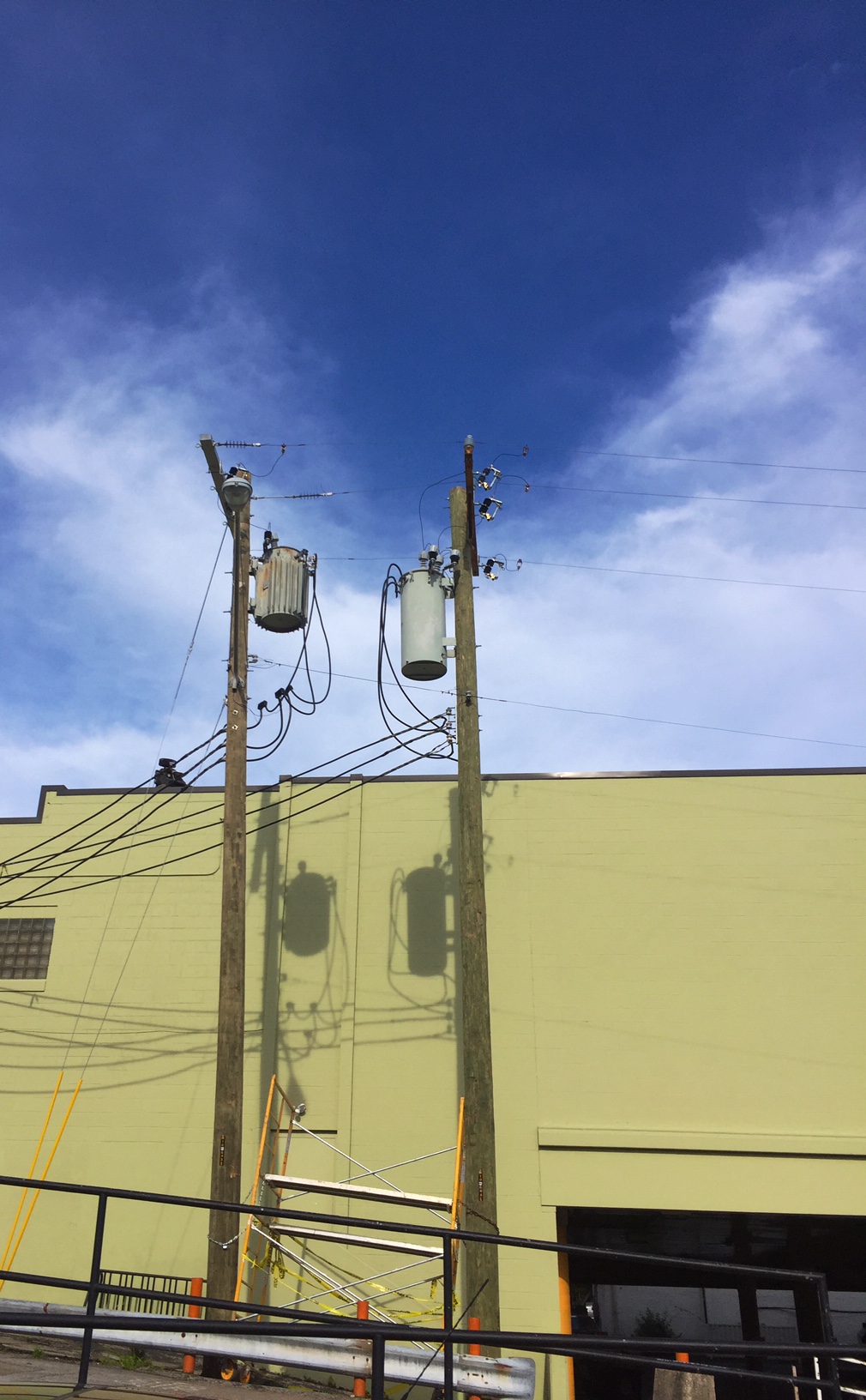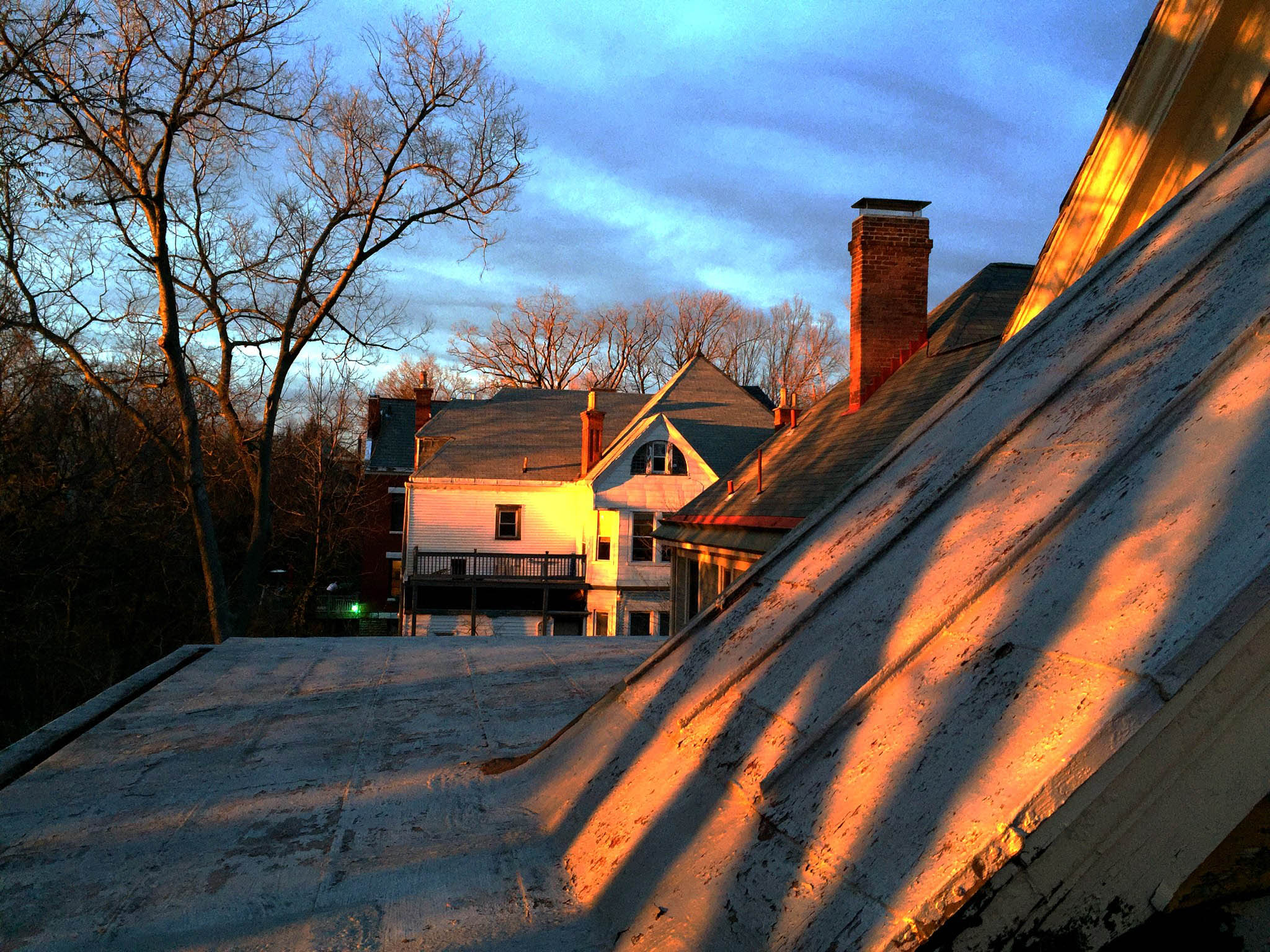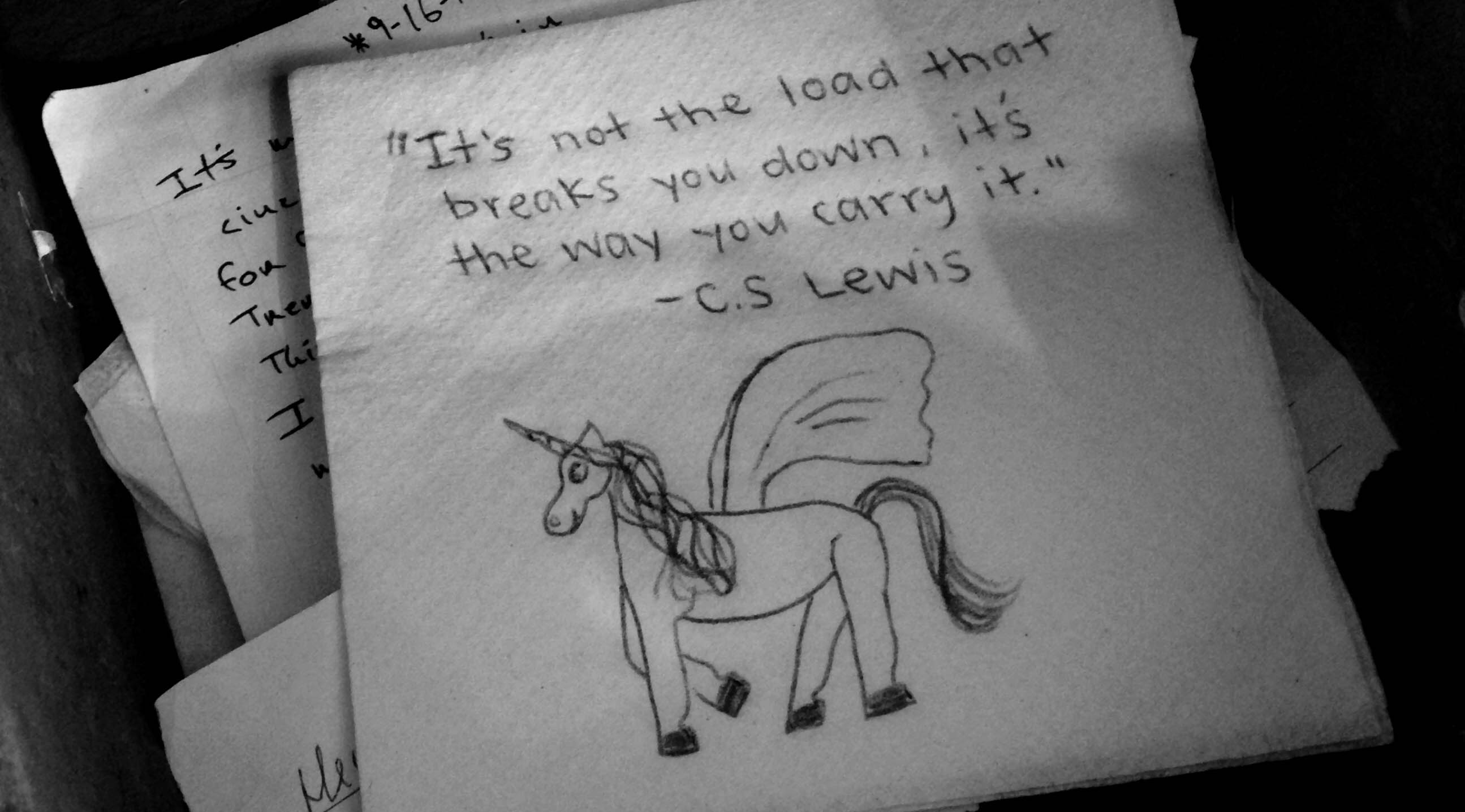
• picture of my window seat Warm up! Write eleven three-line poems about things you see right where you are, right now.
    Eleven Miniature Poems, March 25, 2017

    1 |Roots
    The cutting in the windowsill vase
    is shooting out roots
    but it cannot grow there forever

    2 | Fur
    Cordelia is striped, like a tyger burning bright
    descendant of some fierce African wildcat
    trapped now in domesticity

    3 | iPhone
    Black glass gleams like your eyes did
    if I touch the screen it will light up with worlds and words and wayz
    I think of the mirages on hot highways in summer

    4 | Coffee
    Bittering now, sitting alone on the ledge
    waiting to be held again in my hands
    longing to be swallowed in my mouth

    5 | Highlighter
    Neon-yellow, it seeks and finds what
    should be remembered, the important bits
    is the rest really forgettable? Unimportant?

    6 | Quilt
    Grape jelly purple, my round babies once
    sighed and slept beneath you
    Sometimes I see you breathe

    7 | Berry
    Stray, lost, dried-up scarlet berry
    remnant of Christmas past
    (it’s almost April)

    8 | Postcard
    Dear Mama, it begins
    I’m feeling excited, it continues
    I see it tremble in the window breeze

    9 | Clothespin
    Tiny clothespin, tiny strung line
    I have hung memories on you
    they shine on me every day

    10 | Sketch
    She’s playing the sonata forever
    her left foot pedals, her fingers fly
    I can still hear the music

    11 | Lintbrush
    Lurking like an aunt before the funeral
    descending to pick away any flaws
    I feel judged

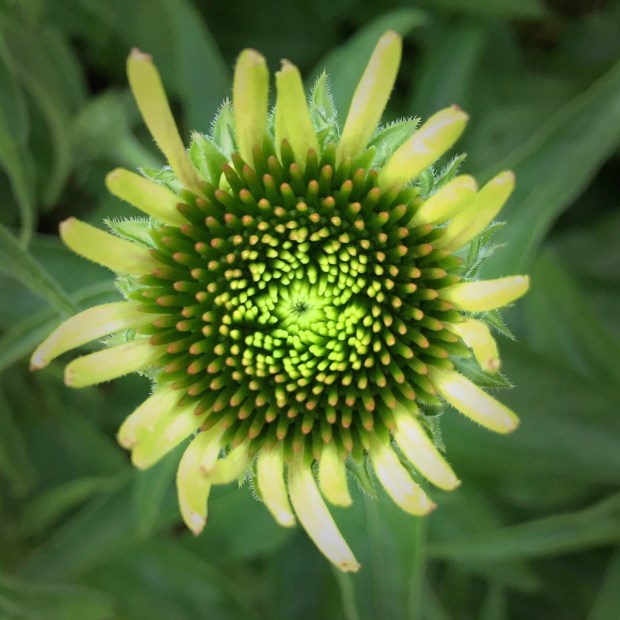
  • photo of budding flowerwild and green

    On my wedding day, I was filled with anxiety, mine and my mother’s.

    I was wild and green in the ways of the world, though I thought a ceremony in Butler’s green garden would transform me into a more peaceful creature. I stood with my mother, waiting for my intended to arrive. I was there and not there: I firmly remember the carillons that sang and the placid old canal that drifted by, the buzzing droopy-headed zinnias and black-eyed Susans, the old-world rose bushes—all beautiful, contained, tranquil.

    Carefree, not wild.

    That day I’d turn into a wife, half of a unit, domestic, safe and saved.

    On the outside I was transformed already, placid as the canal, sure of myself as the bees were sure of their buzzing industry. Yet I was wild inside, standing there next to my mama, a roiling mass of ancient fears.

    Wild like a frightened doe, tired from running, running. Heart beating hard, danger clanging so constantly that mostly I was not even aware of it. Danger simply ran in my veins, and had for as long as I could remember.

    Danger was wild in the rivers of my blood. Danger splashed in the waterfall of my heart.

    I had no business getting married, but to be wild is, after all, dangerous. Plus, I was tired of being hunted. Somewhere inside I thought being caught would save me.

    – – –

    Deer were always an obsession for me. As a very small child, I drew deer after deer. I painted pictures of deer, read books about deer. I loved deer and wanted to be a ballerina so I could gracefully move like a deer. And disappear, like a deer.

    But deer are wild things. Peaceful, except when under attack. Always wary, though. If a deer is cornered, and cannot run away, if a deer is outmatched and at the mercy of a terrible predator, she cannot hope to win by fighting. In cases like that, she will freeze.

    I froze once, like a deer
    I froze, like a river
    I thawed and ran fast again,
    like a deer
    Like a rushing stream, like snowmelt
    down a mountain
    even when perhaps I should have paused to think
    I was wild and green all my young self seemed to know
    was freezing and rushing.

    – – –

    On my wedding day, I was young.
    Younger even than my 23 years. Being frozen keeps you from growing up. So does running.

    I was green. The lushness of the garden, the safe feeling I had next to my intended—gave me a sense that I was on a path. A path that might lead me out of my wildness. My scary, uncontainable wildness.

    The path would rescue me from myself.
    This was a sweet green notion, a kiwi of a belief, juicy and promising and bursting with seeds of hope.

    What I did not know, in my greenness, was that you cannot shed your wildness like a snake sheds her skin. The wildness is inside, part of you.

    I was right about the path, though.

    It did lead me out, and then, decades later, landed me back in the thicket of myself, heart beating wildly, learning at last to savor the moments of life that stretch across the bones of time like supple muscles. Stretching, tightening, strengthening, and finally, letting go.

    I’m still wild and green.

    Older now, I have learned to listen to the wind, smell danger, believe the things my own heart tells me, and to love the wild frozen little girl-deer I carry inside. I learned that love does not rescue. Love merely holds your hand, then pushes you to grow. Self-love and every other kind of deep love pushes you to the edges of your self.

    And when you grow, you risk.
    One person’s sunshine is another person’s scorch.
    One person’s neat-cornered bed is another person’s prison.

    Sometimes you have to grow alone, in the wildness, where the deer appear and disappear to keep you company, silently.

    (I wrote this from a prompt by Natalie Goldberg, “Write about when you were wild and green.”)

  • Marchsky

    The sky today is milk-colored, snow is flurrying down and the naked trees shiver in the wind.
    It′s a day when anything might happen, in a world where everything is shifting under my feet.
    Things I thought solid suddenly slippery as black ice—

    It′s a day to breathe in the chill air and watch your exhale make a tiny cloud. A day to remember what a mystery that was when you were a little girl bundled in your red parka, itchy wool mittens attached by clips.

    It′s a day to remember America was not great back when you were a white child in the white suburbs outside Toledo, in a brand-new tract home in a place called Sylvania. No. It wasn′t great. “Great” was merely the undercurrent of every advertising slogan, “Great” was a story spun by ad men and sales men and con men. (They are still selling you fear and telling you it is happiness).

    Men who sold your mother on the notion that the ache in her heart  could be eased by a Midol or a Virginia Slim′s cigarette or a new Chevrolet or an A-Line dress. Men who told her that her uneasiness was her own fault, and that comfort would keep her safe. Men who peddled fear and separation and complacency. The TV glowed and mama stopped looking at the trees.

    (Her eyes were sad but the jingles told her she was happy.)
    You were a little girl, and you felt that ache. Feel it still, when big flat televisions trumpet
    news news news.

    And so you′ve learned to look outside.

    It′s a day to look at the milky sky and the black arms of the trees shivering and remember the world is not black and white, not wrong and right. A day to remember that anyone who tells you the ache in your heart is nothing is a liar, or someone who wants to steal your life from you. Anyone who tells you to stop feeling what you are feeling may as well tell the trees to stop trembling in the March wind. Might as well tell these tardy snowflakes to stop falling.

    The ache is there to help you. Listen to it.

    Denial of what is will pull you under, into despair.
    Acceptance may break your heart, but a broken heart is an open one.

    Let the snow fall into your heart.
    Feel what you feel. Cold, alive.
    After all, anything might happen, if your heart and eyes are open.


  • photo of sculpture of spine comprised of people on each other's backs, covering the eyes of the person below.
    “Karma” by Korean artist Do Ho Suh | New Orleans Museum of Art

    A letter to my chiropractor:

    When I saw you last December,
    your warm fingers on my neck felt reassuring —
    it’s pure trust, letting someone adjust your spine.

    “Relax,” you commanded, for I was tense.
    The muscles surrounding my precious cervical vertebrae
    relaxed into your palms.

    I told you I was tense because I was worried,
    really worried about the Trump administration…

    Your healing hands moved to my shoulder, the tricky one.
    You felt, you pulled, you pushed,

    you said, with a chuckle: “Oh, come on, now.
    You’ve got nothing to worry about.”

    I said I worried about my friends and loved ones,
    the non-Christian, the non-white, the LGBTQ, and immigrants, too.

    And, that I was also very worried that my ACA insurance
    would be taken away, that I’d not have any insurance
    because hey I’m old enough now to have a track record
    and anyone with a track record
    involving two near-death medical experiences
    looks like a big old pre-existing exclusion

    Your right hand was on my thigh, left hand cradling my shoulder
    You pulled me back against your body, almost lover-like,
    to twist my spine

    (real healing requires trust)

    You laughed.

    You said, “Oh nothing will change!
    Relax! No one’s gonna take your insurance away.”

    You were not the first white professional man
    to hush me, tell me everything would be fine.

    (I’m just sorry that you were wrong.)

    Business may become very lean, doctor.
    It seems strong spines have gone
    out of fashion in many circles.

  • impermanence
    Elm tree, blue sky
    Farewell, beautiful.

    I’m going to say it straight out. Somebody’s going to die tomorrow.
    Actually, I’m sure, lots of somebodies will die, but there’s one in particular
    that I’m thinking of tonight.

    Nothing lasts forever.
    Joy comes, and goes.
    Seasons come, and go.
    Grief comes and goes, too.
    Whole countries, entire species,
    blazing stars in the sky—
    come and go.
    Tomorrow the elm tree outside
    my west-facing windows will be taken down.

    Chain saws will whir and bite.
    It will be fast, the end.

    Tonight I’m saying goodbye.

    I get it.
    It’s become dangerous, the elm.

    Too big for its place. It has to go.
    It could hurt someone.

    (Hurt is part of life)

    Joy comes, and goes.
    I will miss her outstretched limbs
    reflecting in my morning coffee in summer,
    I will miss her golden leaves in the fall.

    She healed me, that tree.

    I spent hours looking up at her.
    I owe her a lot, I think.
    I wish I could tell her:

    She gave me the gift of learning to just be.
    To laugh and cry and and let go of what was and be myself alone.
    (Though I suppose I wasn’t ever really alone; she was there?)
    I’ll carry her gift with me, planted like a seed
    rooting in my heart.

    I’m getting more comfortable with impermanence.
    Better at letting go.
    Better at grief.
    It’s just a tree, after all,
    a little piece of heaven,
    exhaling oxygen
    patiently teaching me how to breathe in life.


    The elm in my morning coffee.
    The elm in my morning coffee.


  • photo of my mother, as a young teen, doing a headstand
    Barbara Stone, sometime in the late 1930s.

    It’s your birthday, Mama. In the picture you’re about 12 or 13, but you did headstands for as long as I can remember. When I was a teenager, I lived in fear of your doing one when a friend was over. The other mothers didn’t do things like that.

    I’m beginning at last to see you more fully, twenty-five years after your last earthly birthday. A truer picture emerges as I learn more about life, about myself—maybe it’s you coming clear or maybe it’s me? But the veils are falling away.

    For a long time, I kept my memories of you behind those veils, blurring the edges and obscuring the painfully sharp details. The veils were garnet-colored, the blood-red of your birthstone. Looking at you through them softened the memories of you, made them pink and pretty as a sunset, and as distant.

    The summer I was eighteen your anchoring roles were torn away. Your last baby (me) off to college. And then: Dad died. I still remember the grief, suffocating and thick as the August air. Suffocating because we were locked into pretending to be strong and calm, you and I.

    At exactly the age I am today, you became a widow. And all these years later, I am a divorced woman. Funny how both of us emerged from long marriages, newly single at the same age. I feel a new kind of kinship with you. I guess our relationship isn’t over, is it? It’s true what they say: the people you love live on in your heart.

    As I find myself, I unearth pieces of you, and you continually surprise me, Mama. You are not all fierce hugs and pots of vegetable soup, not just chewy raisin-oatmeal cookies and games of cribbage and piles of books and papers everywhere, though I see you in my mail stacks and my habit of saving the tiniest bits of leftovers.

    I also find your “hot-spit” spirit in the shards of my anger, I find your ancient wounds, and mine, in my middle-of-the-night panics. I hear your voice sometimes in my dreams, and in shrill of my own voice, when I lose patience and boil over. Oh, I am fine, Mama. More than fine. Like you, I’m resilient and now: I don’t have to pretend to be ever-strong and ever-calm. I can just be me, roiling emotions and all.

    The last gifts you gave me are the ones I’ve spent the last couple years opening. Remember that night in the kitchen after your chemotherapy, in the window of time before you grew queasy, how you and I sat and you told me some things that maybe you never told anyone else, because I needed to know them?  Or maybe you told others, it doesn’t matter. You gave me what I needed to figure myself out. I didn’t quite know what to do with most of what you shared; I was embarrassed by your shame at your human failings. My own baby was stirring in my belly, and somehow I thought it best to push difficult things aside. Pretend it was all okay. I was afraid, you see.

    I told you not to worry about the things you’d shared, things that were hard for you to say. Personal things, confessions of your weaknesses. I dismissed them all away with a rushed out thank- you-for-telling-me. I put those precious words, the evidence of your humanness, your stumbles and triumphs that were just you and not my mother, into the bottom of my very deepest brain-drawer when you died. And I pretended I was ever-strong, ever-calm. I was carefully incurious.

    Silly, blind me. You meant to give me a shortcut, didn’t you? You were trying to let me know: it’s okay to be human, that falling apart—happens sometimes. That the key is trusting, and sharing, and connecting. Getting up, and forgiving yourself for falling.

    And all of that starts with not pretending to be strong or calm when you are not. It means not pretending at all. It was like in the Wizard of Oz, when Dorothy realizes she’s had the power to go home all along. Pretending to be what we are not, to deny who we are, drives us into very lonely territory.

    This year, I finally learned how to do a headstand. Like mother, like daughter.

    I’m so glad, Mama, that you are still here, in my heart, while I figure things out.


  • 11703574_10207310081527376_9128149954750898429_o

    Louise Erdrich says in her poem, “Thistles”:

    “under loss and under hard words,
    under steamrollers
    under your heart,
    it doesn’t matter. They can live forever.”

    I think there are some feelings that are like thistles, that’s why Erdrich’s poem and the thistles along the sidewalk speak to me like an old friend as I ponder how some losses, some griefs, some pointy bits of the past never do entirely smooth over or disappear.

    They simply die back for a while, and you think they are gone. Then you’re innocently snapping a photo, minding your own business, and they come back—sharp as ever.

    But they are beautiful, thistles are. They endure for a reason.

    You can read her whole gorgeous poem here:
    http://writersalmanac.publicradio.org/index.php?date=2007%2F06%2F22

  • woman in sparkly dress at night
    Christmas Night | New Orleans | Gentilly | Lit by a streetlamp

    Last year evaporated.
    No.
    Exploded,
    boiled over,
    filled to the brim and
    poured over the edges
    leaving December behind.

    The beauty and the un-beautiful
    combine
    combust
    time escapes like steam from a kettle
    screaming with possibilities
    I want to find more magic.
    I am digging.

    gentilly-nola-christmas2016

  • (I’m writing a mini-novel with flash-length chapters over on Medium.com. Following is the first chapter of my tale of a dystopian future. Check out the rest if you like—it’s a work-in-progress, which I’m hoping to finish before year end. It is a work of fiction. I hope. Access the chapters by clicking here.)

    View at Medium.com

    screen-shot-2016-11-30-at-2-41-09-pm

    2017: Chapter One

    The sirens blared. The President’s voice boomed, an audio clip in an endless loop. “…then I grab em by the pussy,” he crowed, again and again and again, the way he did every morning at wake-up. “She’s a pig, I mean, look at her! Miss Piggy. Call her Miss Housekeeping, why don’t you?” A laugh track — or possibly a recording of hyenas howling, it was hard to tell — ran between bursts of his “boy talk.”

    She’d heard it so many times now. It was designed to make her go numb.
    She let the guards believe it was working.

  • gingko tree
    Gingko tree, Northern Kentucky, Novermber 26

    Walking this weekend brought to mind a poem I remembered about Ginkgos. Their “yellow fluttering fans of light” never fail to inspire me. I attempt and fail to capture them in yellow/fossil/sucked-in-breath poems. They are the last of their division of tree (Ginkgophyta), all others being long extinct.

    Ginkgo leaves are found in fossils dating back 270 million years, and though they are messy and somewhat smelly trees—they are my favorites at this time of year.I look up and get lost. Or look down and get lost, depending on which day I come upon them.

    Here’s a stanza of the poem I had to come home and google around to find. It’s from “The Consent” by Howard Nemerov.

    Late in November, on a single night
    Not even near to freezing, the ginkgo trees
    That stand along the walk drop all their leaves
    In one consent, and neither to rain nor to wind
    But as though to time alone: the golden and green
    Leaves litter the lawn today, that yesterday
    Had spread aloft their fluttering fans of light.

    golden ginkgo leaves on the ground
    Fallen ginkgo leaves.